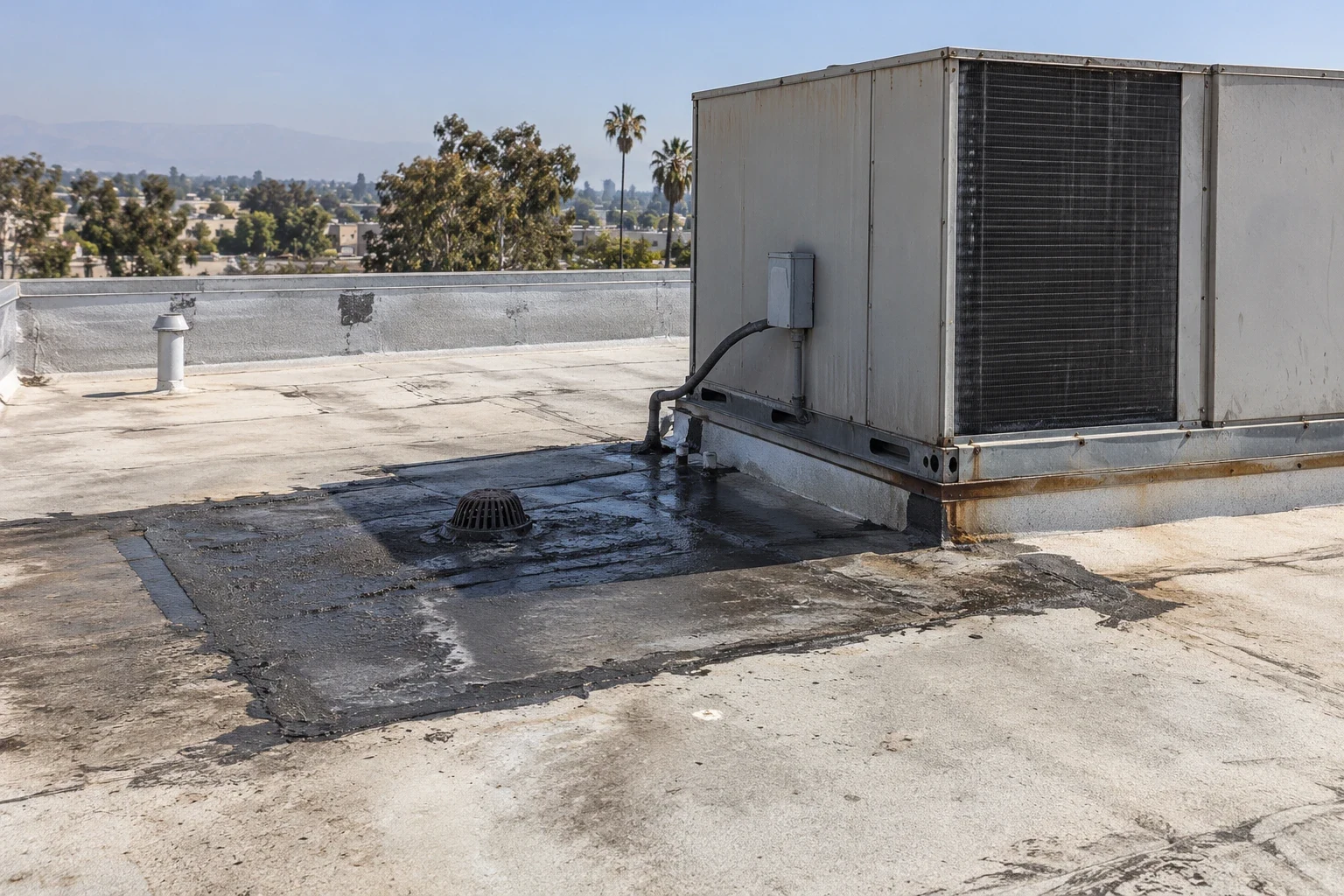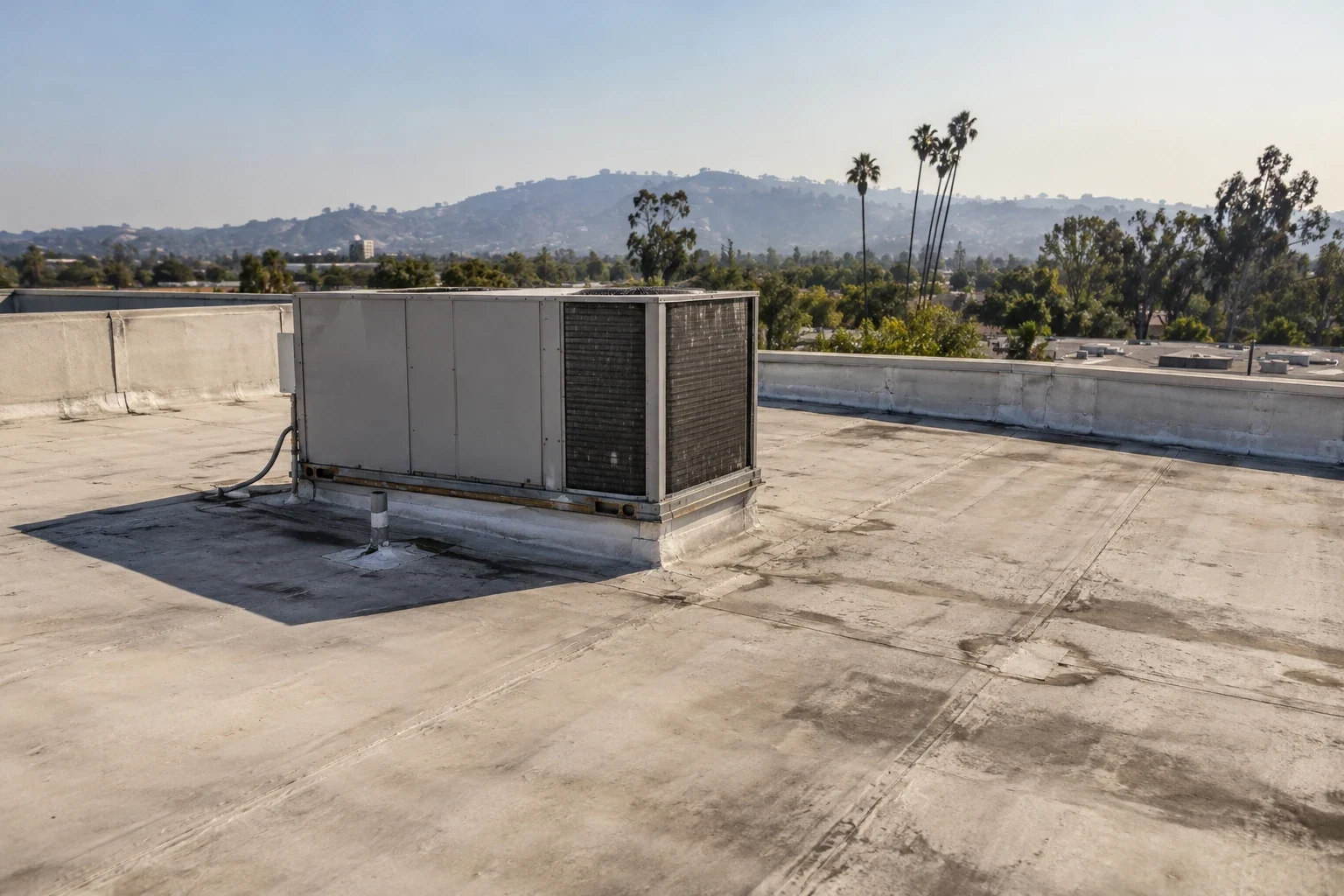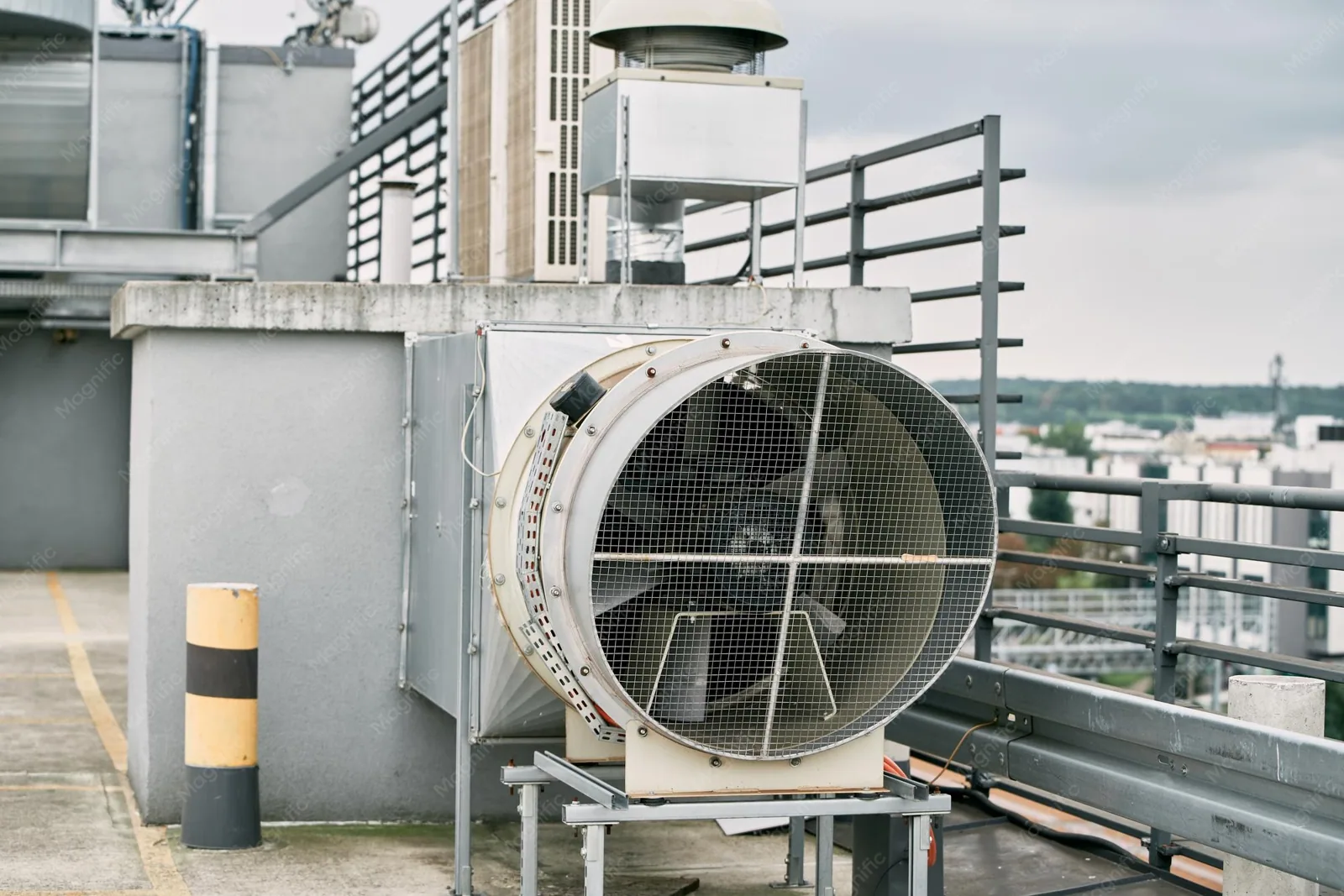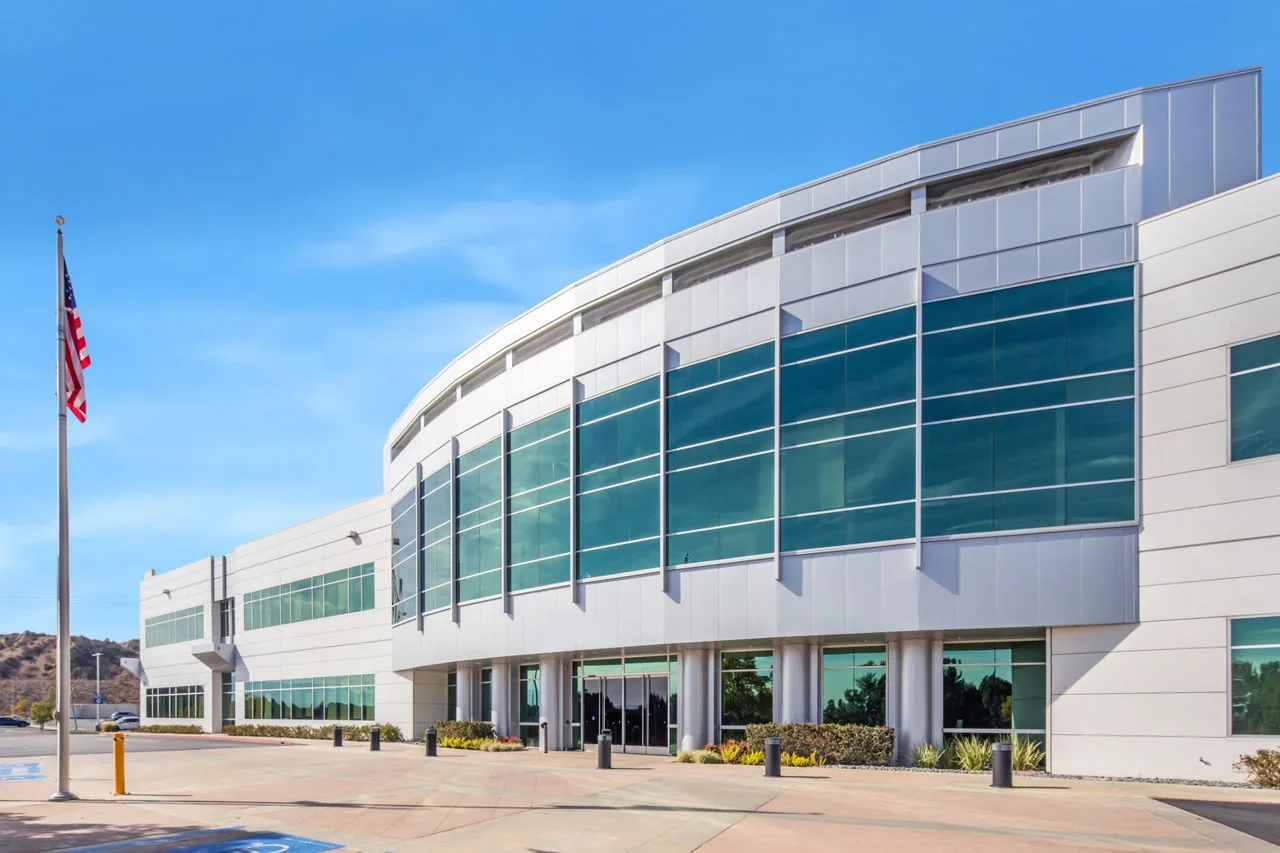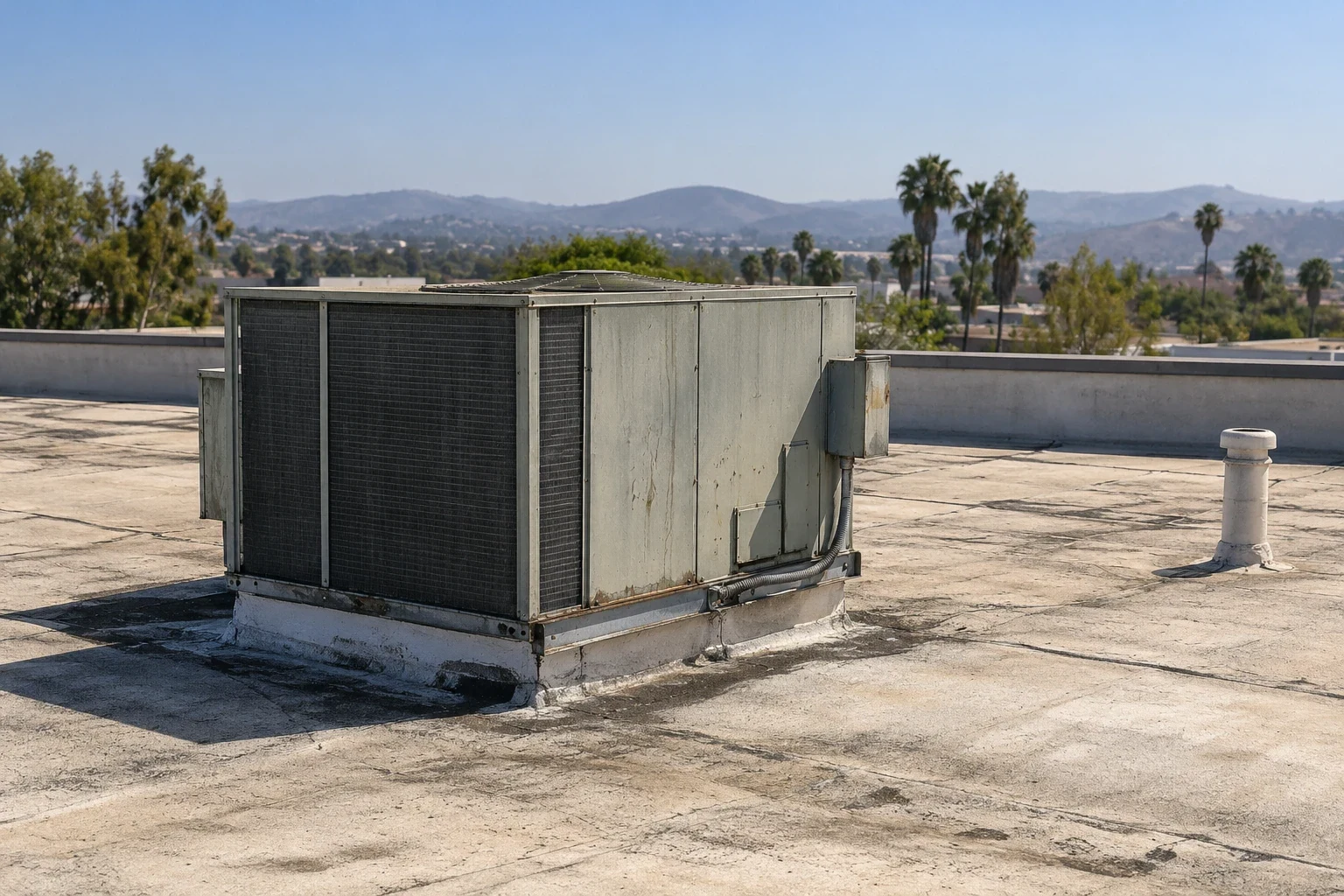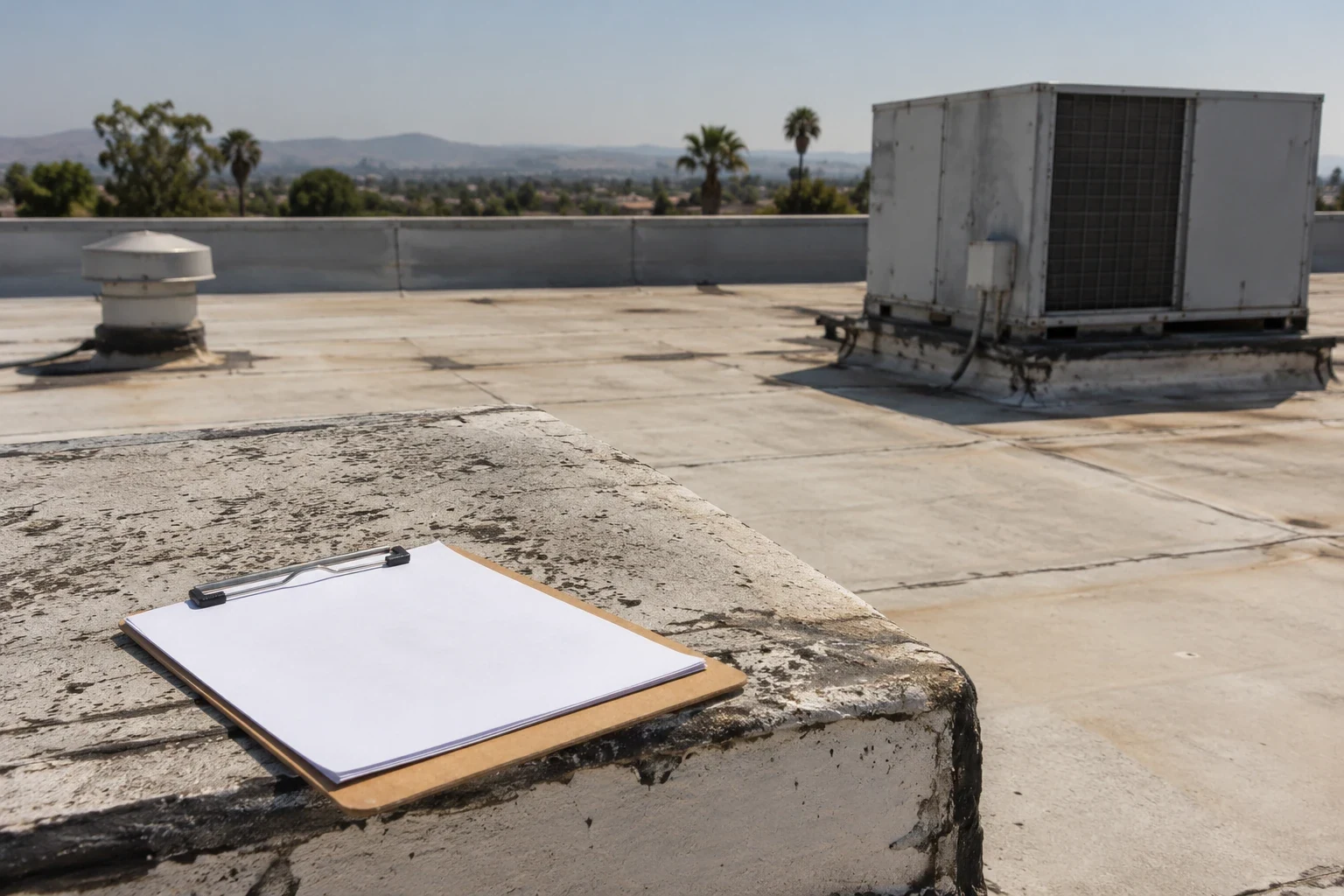

A flashing opening found before winter rain can raise two questions for a Santa Clarita, CA owner. What correction does the roof need, and what does the issued warranty require? Roof warranty management keeps those questions connected without treating them as the same decision. Locate the agreement, document the condition and follow its notice process. The owner can then arrange the necessary roof work with a clear record of the coverage review and required approvals.
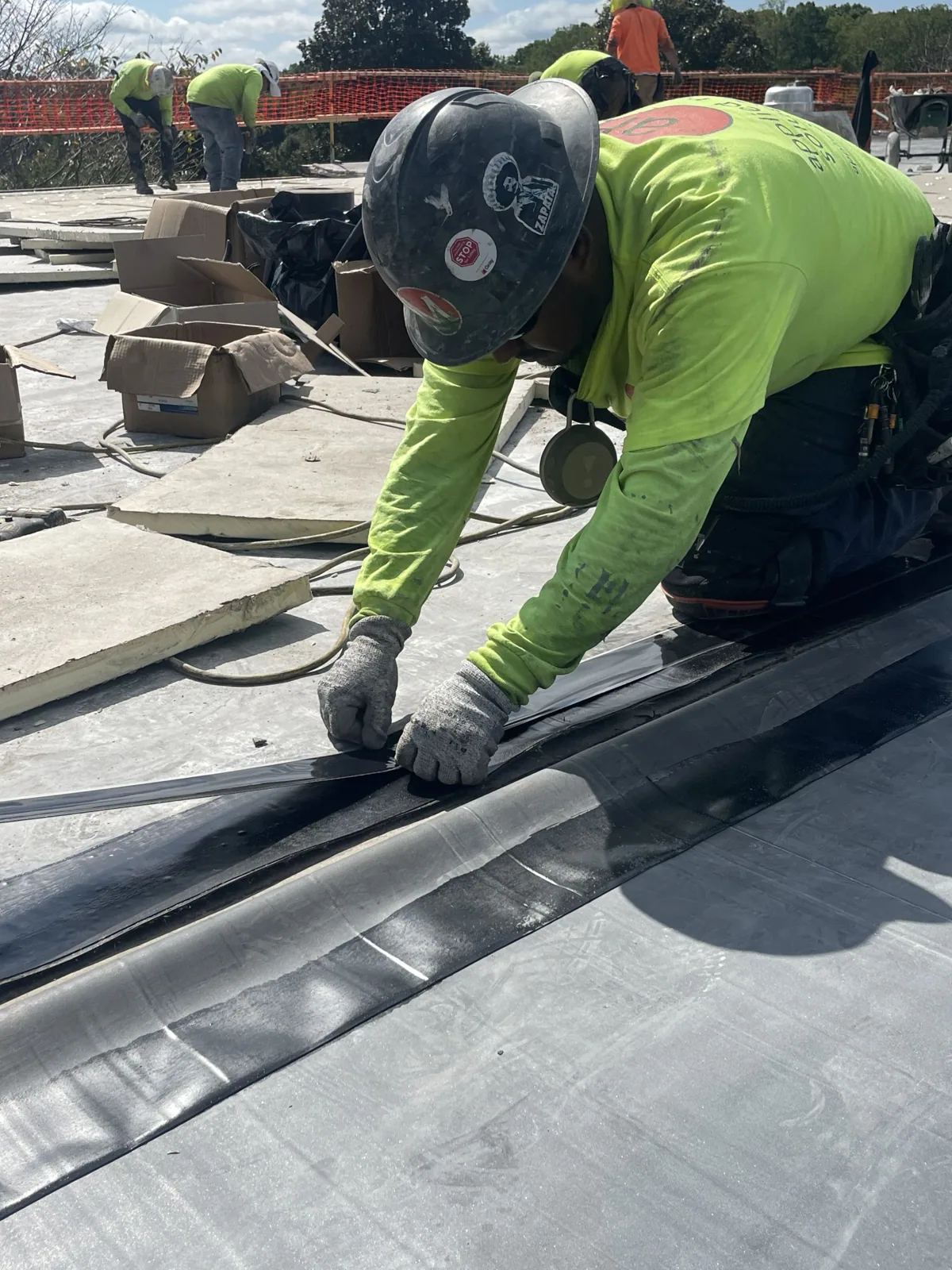
Find the document issued for the completed installation. Check its building identification, covered areas, named owner and dates. Keep the scope schedule where one agreement covers only part of a building. A proposal describing intended coverage is useful project history, but the issued document establishes the agreement available for review.
Roof asset records should keep that document beside installation and repair information. Locate amendments and correspondence that affect the current agreement. Read its notice, maintenance and alteration provisions before planning permanent work. If a required document is missing, ask the issuer for clarification. Record the answer so the next manager can find it without repeating the same search.
Identify the roof area and the date the problem was observed. Include location-marked photographs, water timing and any temporary action. Where the complaint began inside, record the affected room separately from the exterior defect. Water can travel through layers before becoming visible. The notice should distinguish the observed symptom from the cause established by the investigation.
Roof leak investigation can provide that physical basis. Follow the agreement's required contact channel and retain the notification record. Ask what examination or approval is needed before further testing or permanent alterations. The owner should see the roof findings and the issuer's next requirement together. That keeps the repair plan moving with the information the review needs.
A visible opening may not explain the full work required. Inspect surrounding material, attachment and accessible supporting condition. Concealed moisture can affect the scope even when the surface has dried. Choose investigation suited to the assembly and the question. Obtain the applicable sampling permission and arrange closure of any test opening.
A condition report keeps those findings organized. Selected samples establish condition at their locations; surface thermal patterns need interpretation and suitable confirmation. The report describes the work supported by the evidence and the unresolved questions. Coverage review then uses that information with the issued agreement. Keep a physical recommendation separate from an issuer's acceptance so the owner knows which decision has been made.
Review the assembly and alteration requirements before cutting into it. The equipment contractor needs a suitable support and curb arrangement. The roofing scope needs the compatible membrane connection and access for later maintenance. Contact the issuer where the agreement calls for review or authorized work. Include that dependency in the equipment project schedule.
Curb and support alterations receive their own location and completion record. For a property in Rye Canyon Business Park, confirm the equipment contact and operating restrictions for the tenant involved. A facility in Southern California Innovation Park needs the same clear responsibility at its actual roof. Keep approved details and the installed changes together. A later reviewer should be able to see which unit corresponds to each recorded penetration.
Read the maintenance provisions and applicable assembly instructions. Keep inspection dates, completed cleaning and corrective work with the roof record. Photographs should show what was found and what was done. Retain unresolved items instead of closing the entire visit record when only one task is complete.
Planned maintenance can organize these activities before cooler-season rain. For outlets, distinguish debris removal from work changing geometry or piping. For a flashing, identify the compatible repair and its location. A useful record explains the task performed. It also gives the owner information for a later coverage review without claiming that a checklist establishes compliance with every warranty provision.
Obtain the corrective scope and identify who approves a discovery that changes it. Define access, protection and the related trade work before opening the roof. An accepted membrane correction may leave an equipment or support issue for another party. Put those interfaces on the work plan so the owner can coordinate a complete response. Keep material identification and the repaired location available for the follow-up reviewer.
A permanent roof repair receives completion photographs and a description of the installed detail. Include any issuer inspection or acceptance required by the agreement. Physical completion and that review can occur at different times. Retain the status of both. If wider damage changes the remedy, bring the new evidence back through the agreed process rather than treating it as part of the earlier acceptance.
Check transfer requirements early enough to complete the issuer's requested steps. They can include documents, timing, fees or an inspection, depending on the agreement. Identify the responsible contact and keep confirmation in the property file. A due diligence survey can bring the physical findings and available roof documents into the buyer's review.
For an owner retaining the property, an approaching expiration is a useful prompt to review open findings and the applicable notice requirements. It does not establish that the roof needs replacement. Capital planning uses the condition and viable options for that investment decision. Keep the warranty dates alongside the maintenance plan so the owner can manage both without confusing a contract date with a physical failure date.
Treat a roof warranty as a document with specific parties, coverage, exclusions and maintenance obligations, not as a general prediction that a future repair will be covered. Confirm the system and warranty status from the available records, then organize inspection dates, work approvals, product details and service correspondence by roof area. Before a project changes the assembly, identify any notice or review requirement in the applicable document. If records are missing, state that the coverage position has not been verified. This gives the owner a clearer basis for coordinating maintenance and asking the issuer about a particular condition.
Contact the intended issuer or installer with the property and project identification. Ask whether an agreement was issued and request the record. Keep coverage unresolved until that information is established. The roof can still need investigation and suitable protection while the owner searches for the documents.
The issued agreement and coverage decision establish what is accepted. Roofing, interior restoration and equipment work can be treated differently. Ask for the scope in writing and identify additional necessary tasks separately. The owner then sees the complete work plan and the part addressed by the agreement.
Assess the immediate condition and suitable protection, then follow applicable notice and authorization provisions. Document the initial finding and the action taken. Keep the temporary work and permanent follow-up distinct. Ask the issuer what information or inspection it needs before additional alterations are made.
Use condition findings to plan replacement or another larger option. Warranty dates identify obligations under the agreement and the timing of notice or review. Keep both records available. An owner can act on a physical defect while managing the contract requirements without assuming the two schedules are identical.
Bring the issued warranty and roof records for a practical review of notice requirements, current findings and the next corrective task.
Pages that connect with Roof Warranty Management for Santa Clarita Valley buildings.
Notifications