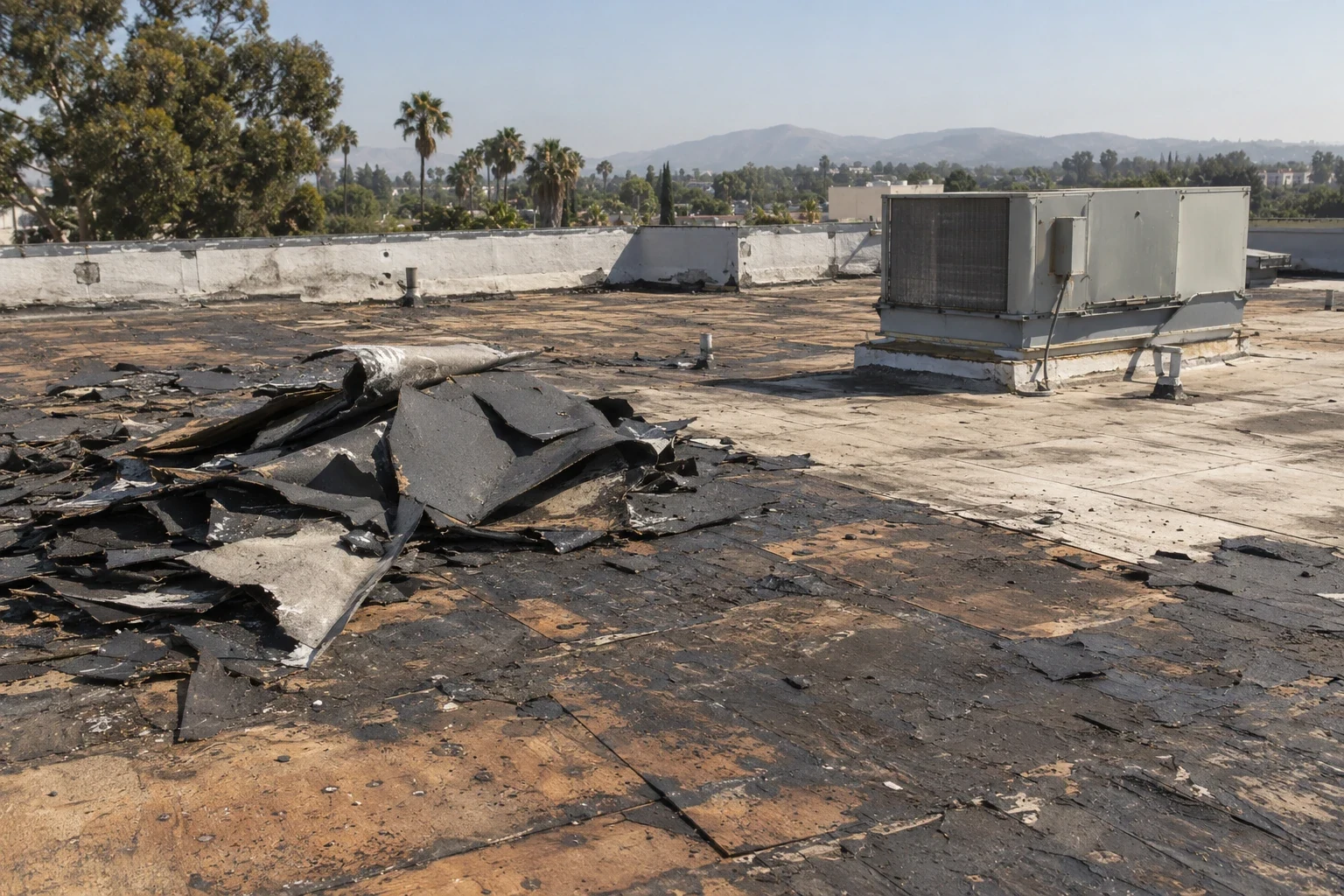

Winter rain gives a dry-season roof a useful test, but waiting for a drip is not the best way to check it. In Santa Clarita, CA, summer heat and cooler-season rain make inspection timing worth planning. Commercial Roofing Santa Clarita checks the actual seams, flashing and outlets, then traces reported water entry to the evidence on the building.
Start with the affected room and the time the symptom appeared. Tell us about earlier repairs and any recent rooftop work. We use that information to plan the search. A ceiling mark is useful, but it does not identify the repair by itself.
We give you the finding, proposed correction and next decision. If another trade needs to assess an electrical, equipment or interior concern, we identify that interface. The roof work stays tied to what we examined.
Water can follow assembly joints, supporting surfaces or concealed layers before reaching the room below. The path depends on the building. There is no fixed travel distance that describes every leak.
We compare the interior location with the roof layout. Outlets, penetrations and nearby transitions help define the search area. We also look at reported timing and earlier photographs. Those clues guide examination rather than settle the cause.
A drip during dry weather needs the same care. Equipment or interior moisture conditions may require qualified evaluation. Timing alone cannot separate condensation from roof entry. We document the roof findings and coordinate the next assessment when the evidence points beyond the membrane.
We examine accessible details in the defined search area. The record shows the locations checked, observations and any restrictions. If the visible connection explains the problem, we can price a suitable correction.
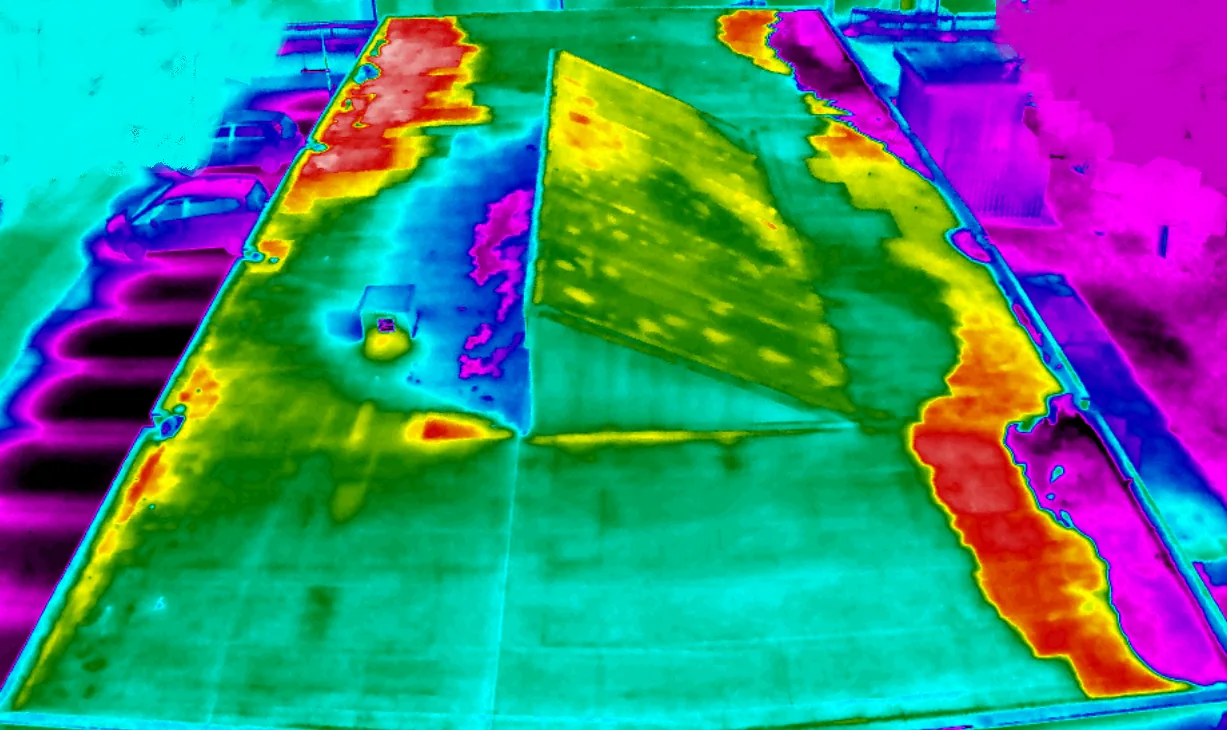
Hidden conditions may need an infrared moisture evaluation and appropriate confirmation. Thermal differences need interpretation under suitable roof and weather conditions. They are not automatically a map of wet insulation. Samples describe the locations tested.
Water testing is considered only when the assembly and building conditions suit the method. We agree on the area, controls and interior monitoring before using it. A test result informs the investigation; it does not prove every other detail is sound. We explain the next action when the result remains incomplete.
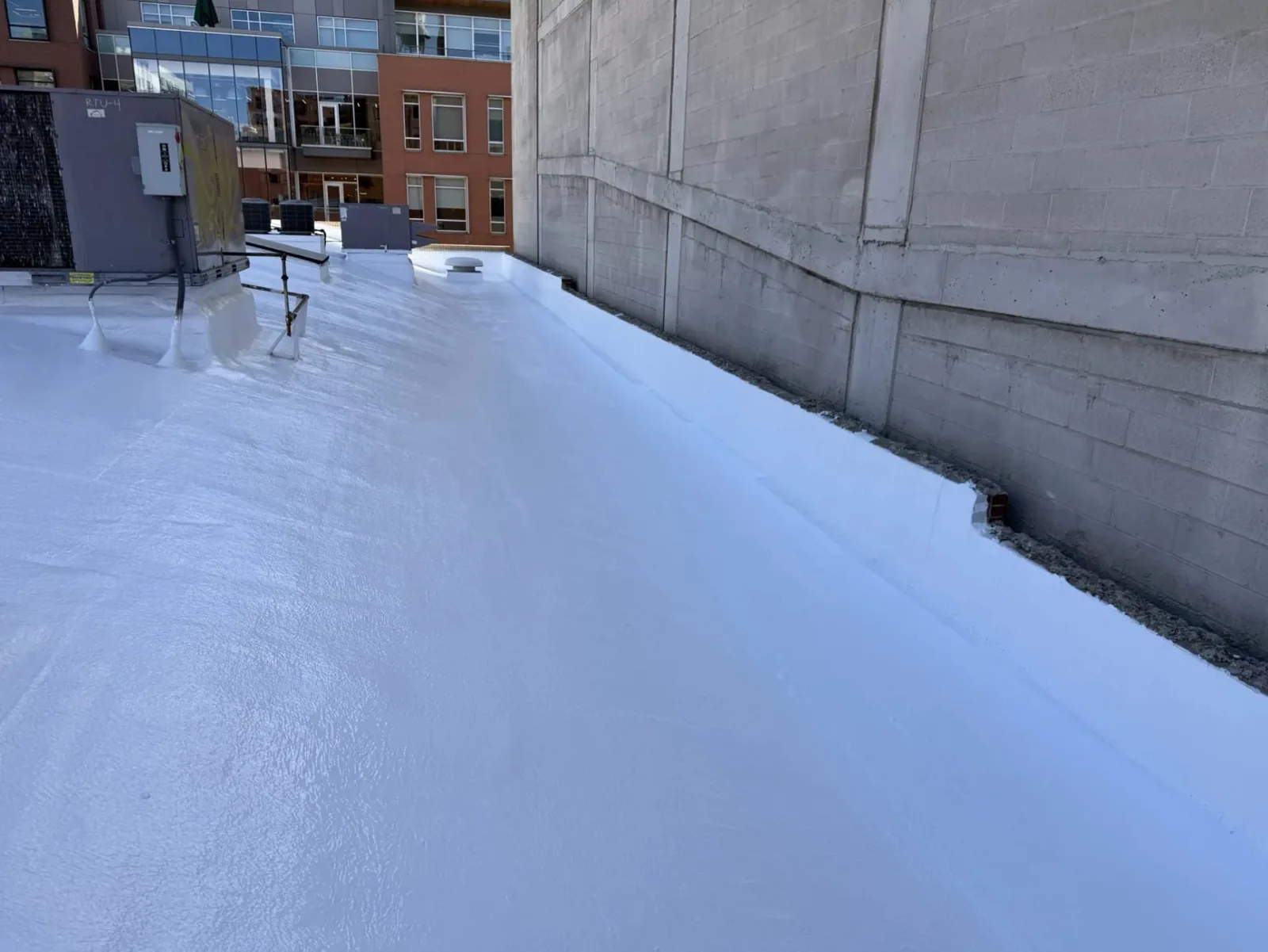
Open laps, damaged penetration connections and loose terminations deserve examination. We identify the installed material and suitable repair procedure. A surface coating or sealant must be compatible with the retained construction, not simply convenient to apply.
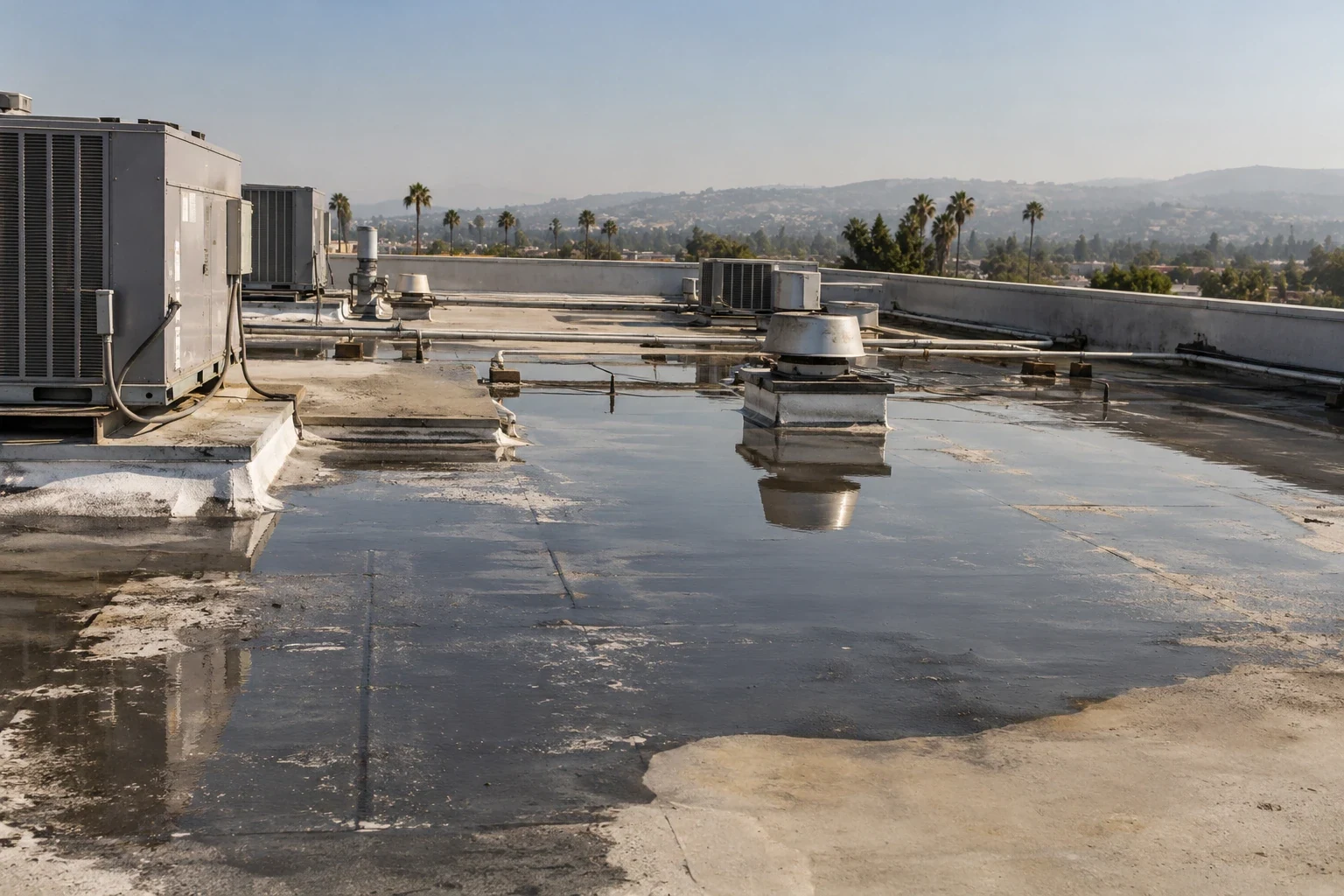
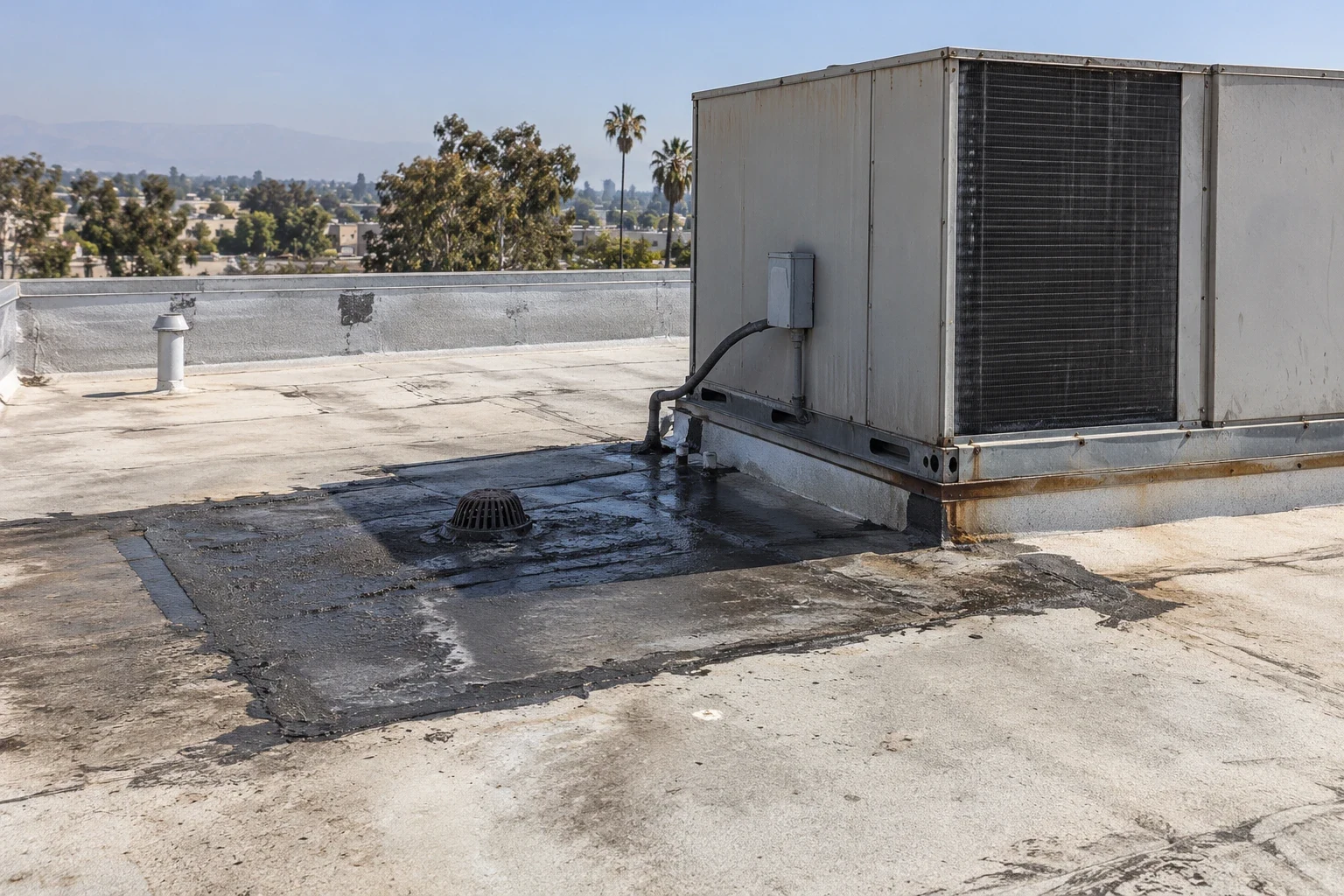
Outlets need attention too. Accessible debris removal, a drain connection repair and downstream piping work are different tasks. We evaluate water remaining on the roof by following the drainage path. The location of a stain alone cannot establish the correction.
At a wall or curb, flashing reconstruction may need a suitable supporting component before roofing work is closed. We separate those tasks in the scope. That gives you a practical approval rather than another unexplained patch.
Report the address, affected area and any access restriction. Photograph the interior symptom from an appropriate accessible location. Building management should coordinate affected stock or equipment and direct electrical concerns to qualified personnel. Do not make an electrical decision from a roof repair instruction.
Our emergency roof service takes calls at any hour. We evaluate the proposed protection against the assembly, conditions and available access. Record temporary work separately from the permanent repair and identify its follow-up.
Keep staff out of restricted roof areas. We need the reported condition and authorized contact, not a risky attempt to reach an opening. Management can then coordinate the interior response while the roof method is established.
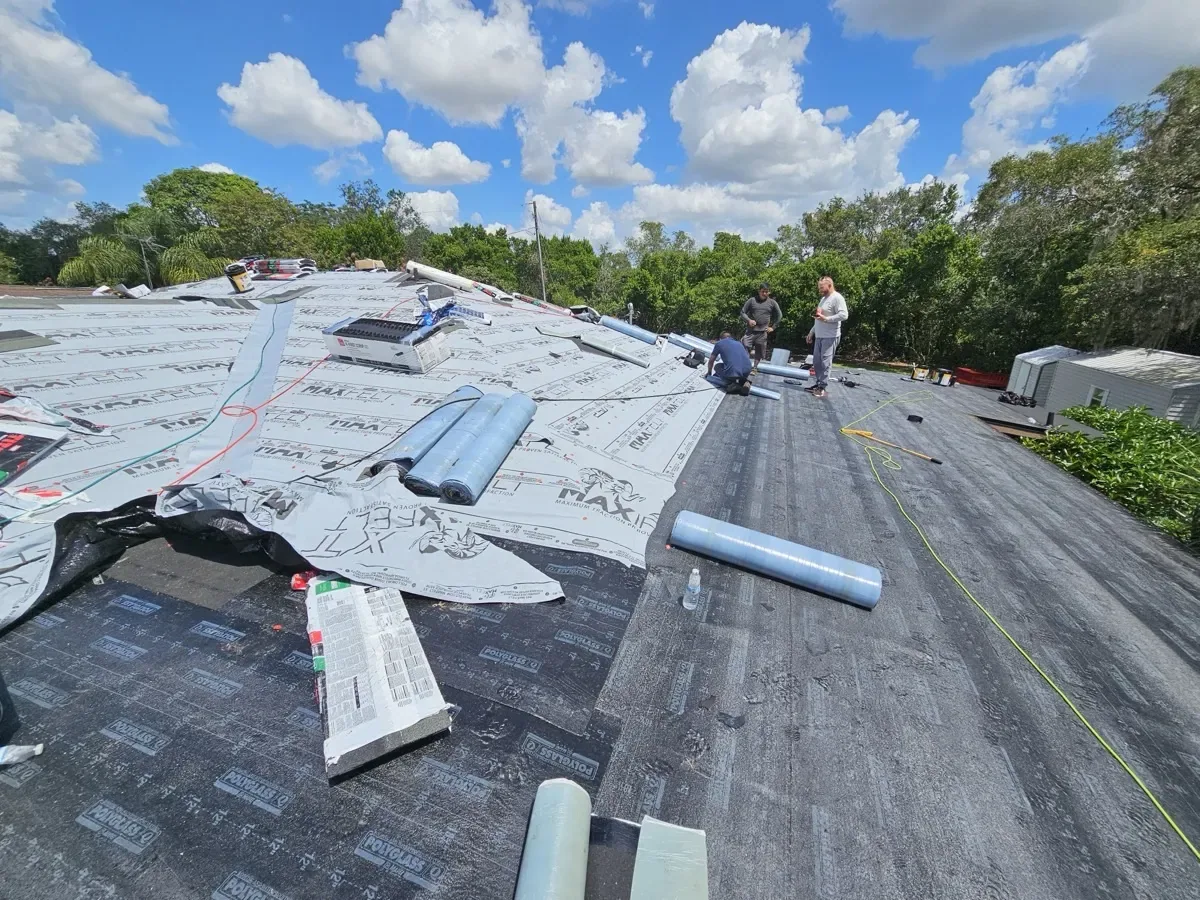
A connection repair needs suitable material around it. If concealed moisture, damaged support or deteriorated roofing affects that suitability, further work may be needed. We show the evidence and proposed limits.
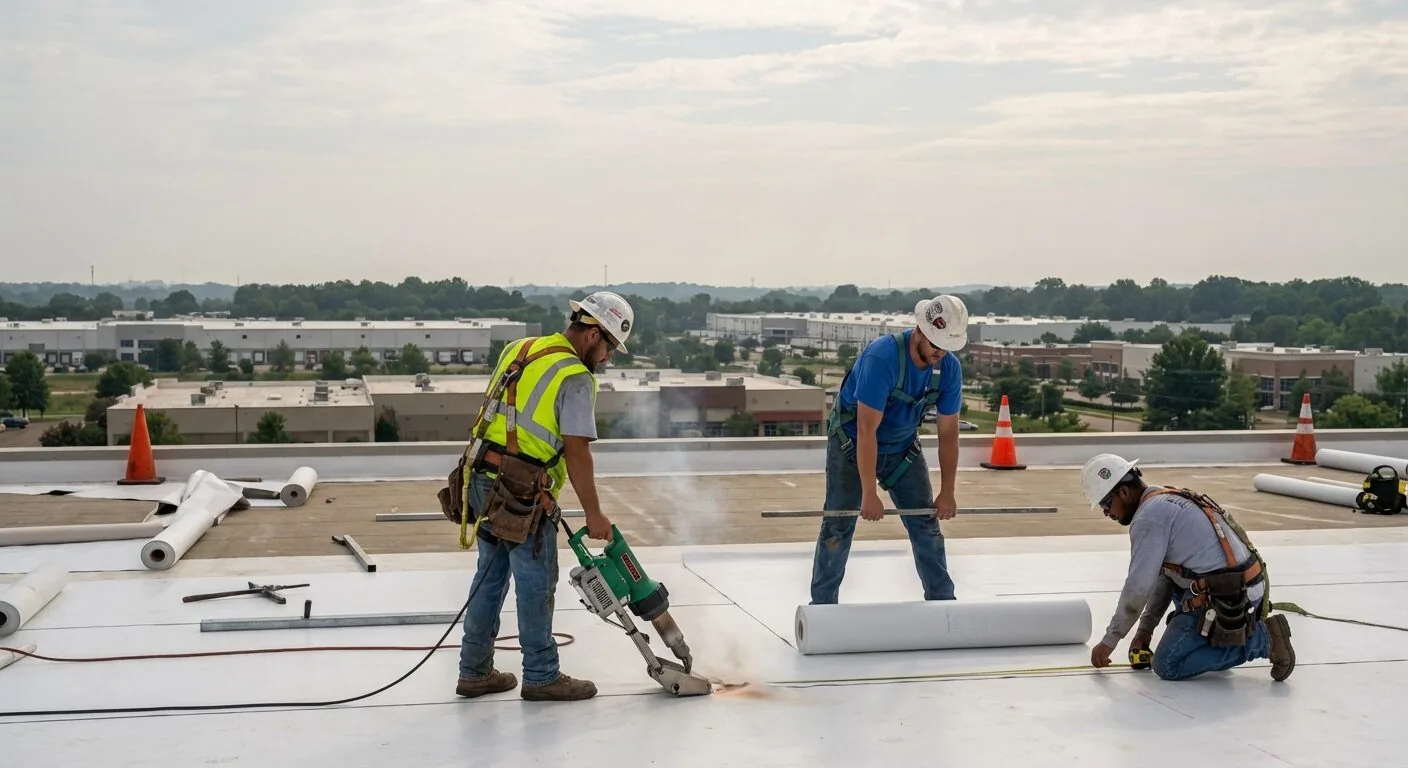
A larger planned repair can include affected materials as well as the entry detail. A replacement comparison may be useful when the findings justify it. Leak count alone does not make that decision.
We identify measured work and allowances separately. Additional findings receive a located record and proposed cost before the approved scope expands. You can see what the next authorization accomplishes and what investigation still remains.
Continued entry can affect concealed layers and interior materials. The consequence depends on the assembly and exposure, so we examine the relevant condition instead of assigning a fixed cost or progression.
Stopping entry and repairing affected construction are connected but separate tasks. A patch does not establish that concealed material is dry or suitable to retain. We explain where evaluation or removal is proposed.
Keep the completed-work record with the earlier findings. Include dated photographs, repair materials and the actual locations addressed. Identify any deferred task and the person arranging follow-up so the next service visit starts with current information. If the symptom returns, we review the location and remaining questions before repeating the last patch. A defined diagnosis is more useful than a cycle of repairs with no explanation of what changed.
The Valencia Commerce Center is an industrial district northwest of Interstate 5 and State Route 126. For work there, confirm loading routes, staging and the building contact. The actual tenant operations determine the access plan.
For Rye Canyon Business Park work, plan deliveries within the district separating Southern California Innovation Park from the Valencia Industrial Center. Coordinate roof access and equipment-service responsibilities with management at the project property. Resolve qualified trade windows before altering an equipment interface.
McBean Parkway links commercial uses in Valencia. At a property along that corridor, identify affected entrances and operating spaces before material handling begins. The repair plan should follow the building information and suitable installation conditions, with the owner informed when the sequence changes.
A ceiling mark is useful evidence, but it may sit away from the roof entry point. Record when water appears, what weather or equipment activity preceded it and whether the affected area changes. Inspect accessible roof details along plausible paths, including nearby penetrations, walls and drainage connections, without treating one observation as proof of the entire route. State which areas could be checked and what remains concealed or inaccessible. If temporary control is needed, label it separately from a permanent correction. The owner should receive the observed source, repair boundary, any moisture follow-up and a clear status if another visit is needed.
We evaluate the method against the roof, weather and access. Suitable temporary work has a defined area and follow-up. The permanent repair follows its own material and condition requirements.
The old repair may not explain the current entry path or retained condition. We review its location and findings, then examine the unresolved question before selecting another correction.
The investigation determines which areas need access. Roof and interior work may involve different responsible parties. We identify the proposed method and affected spaces before an opening is authorized.
That timing is a clue, not a diagnosis. Equipment, interior conditions and roof entry need relevant evaluation. We document the roof findings and coordinate qualified assessment where the evidence requires it.
The recommendation follows their locations, assembly condition and suitable repair options. The number of symptoms alone does not determine the scope. The recommendation explains the findings and next decision.
Call Commercial Roofing Santa Clarita with the affected location and available roof records. We will evaluate the entry concern and give you a defined next action.
Pages that connect with Commercial Roof Leak Repair for Santa Clarita Valley buildings.
Notifications