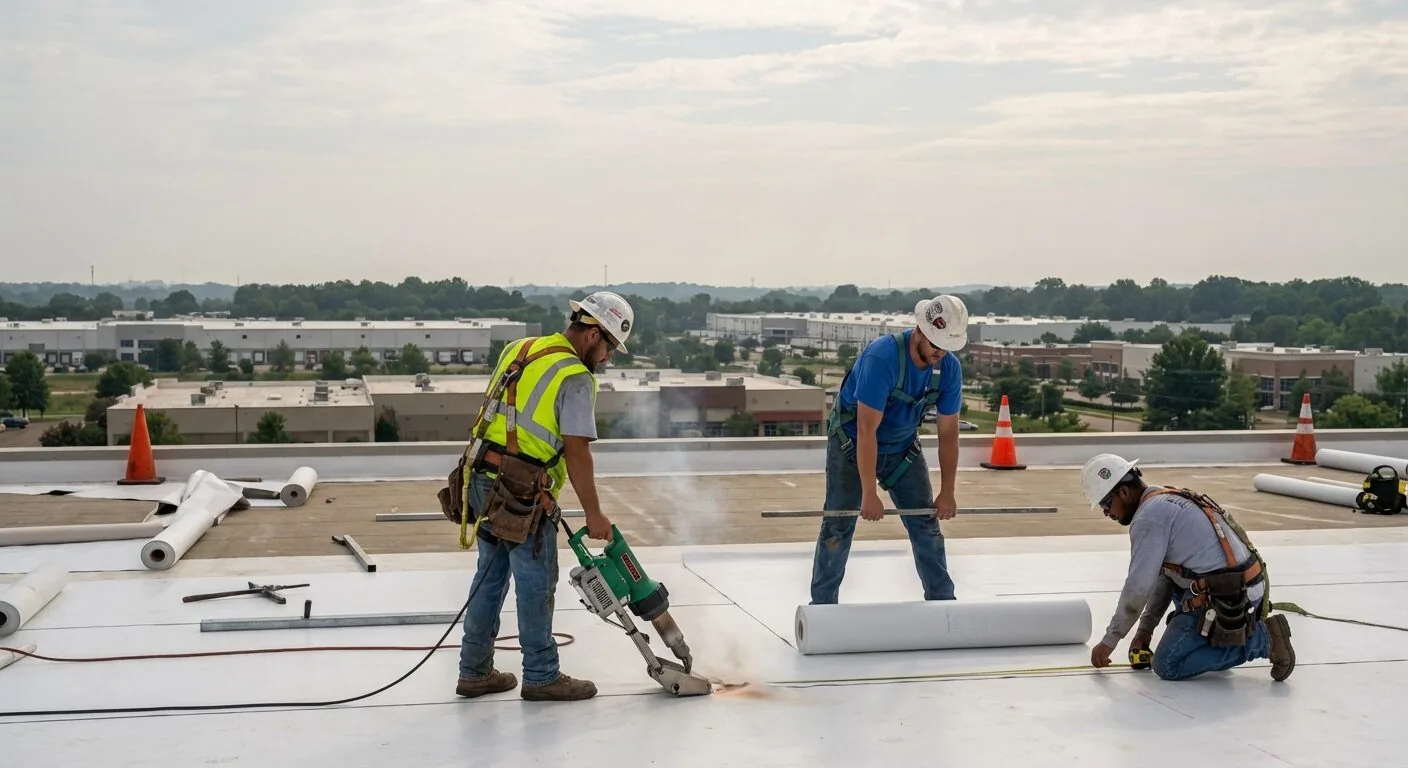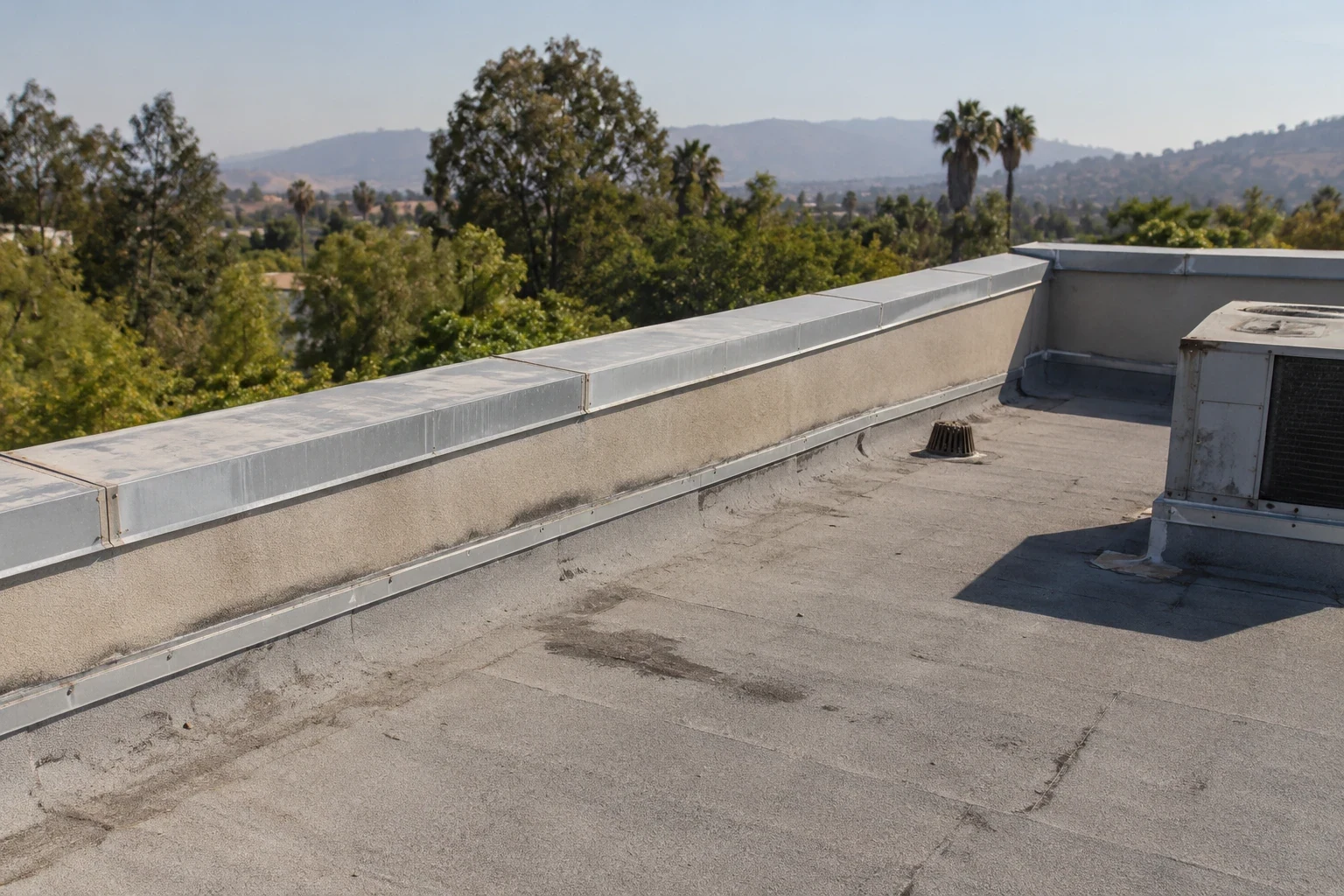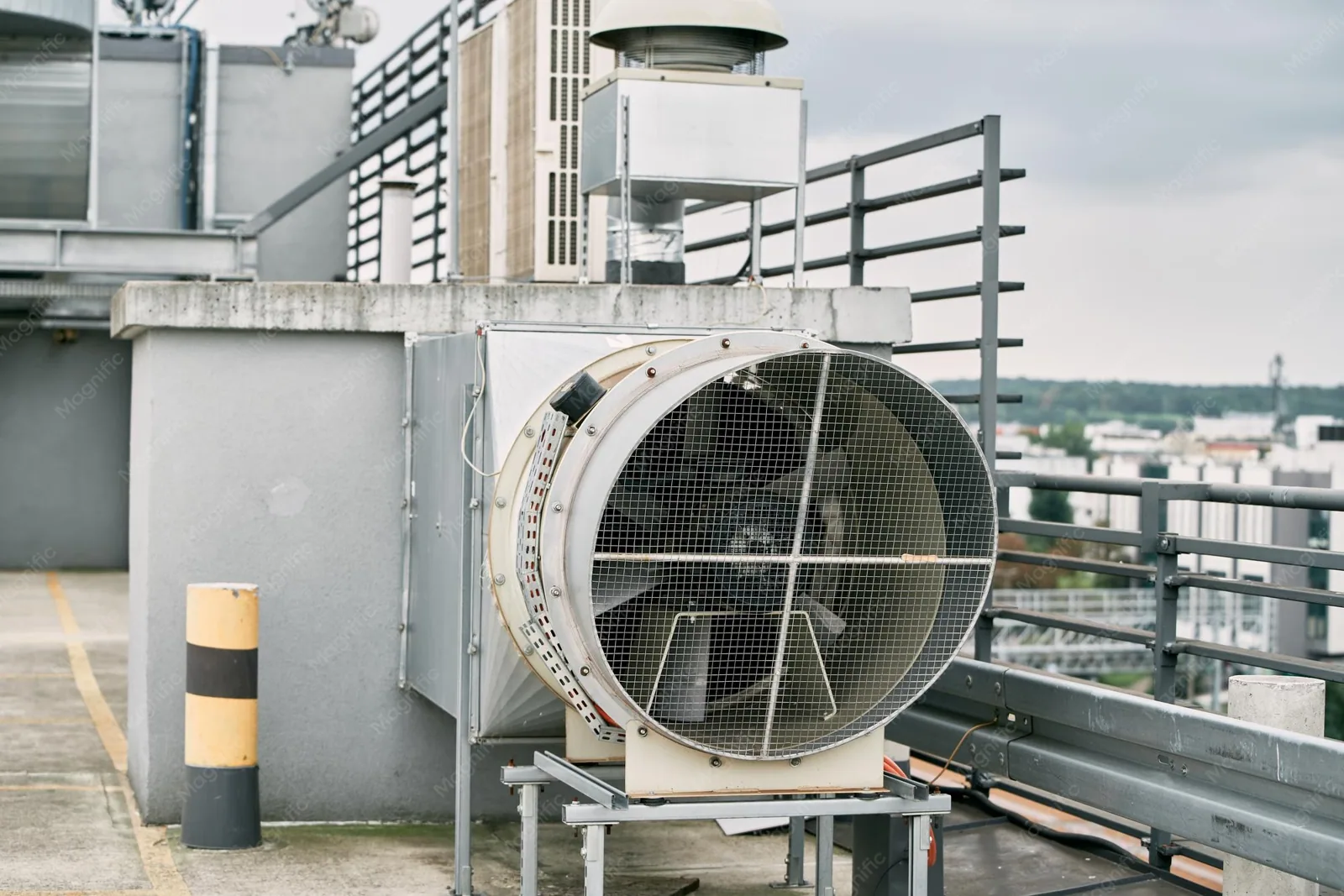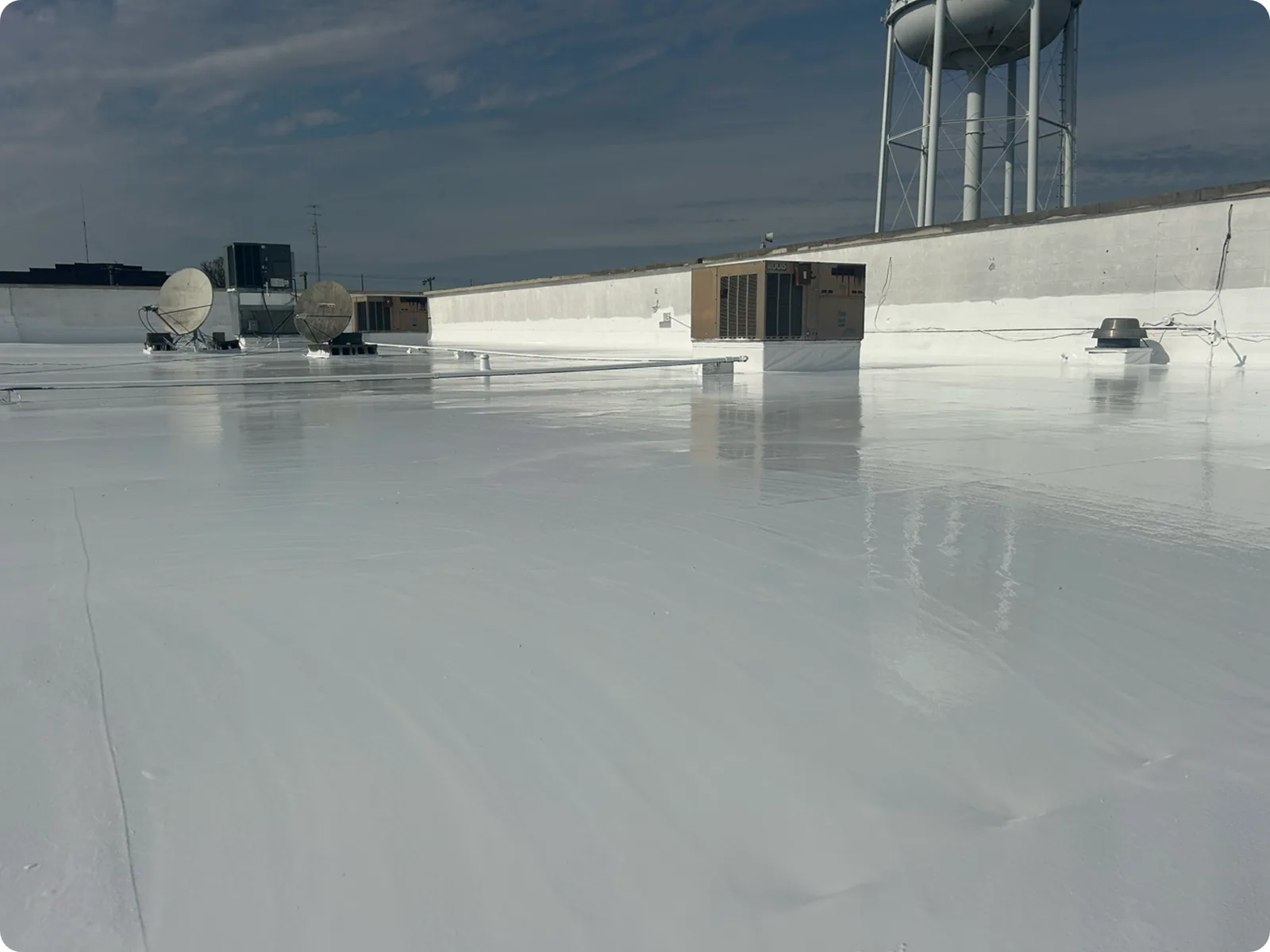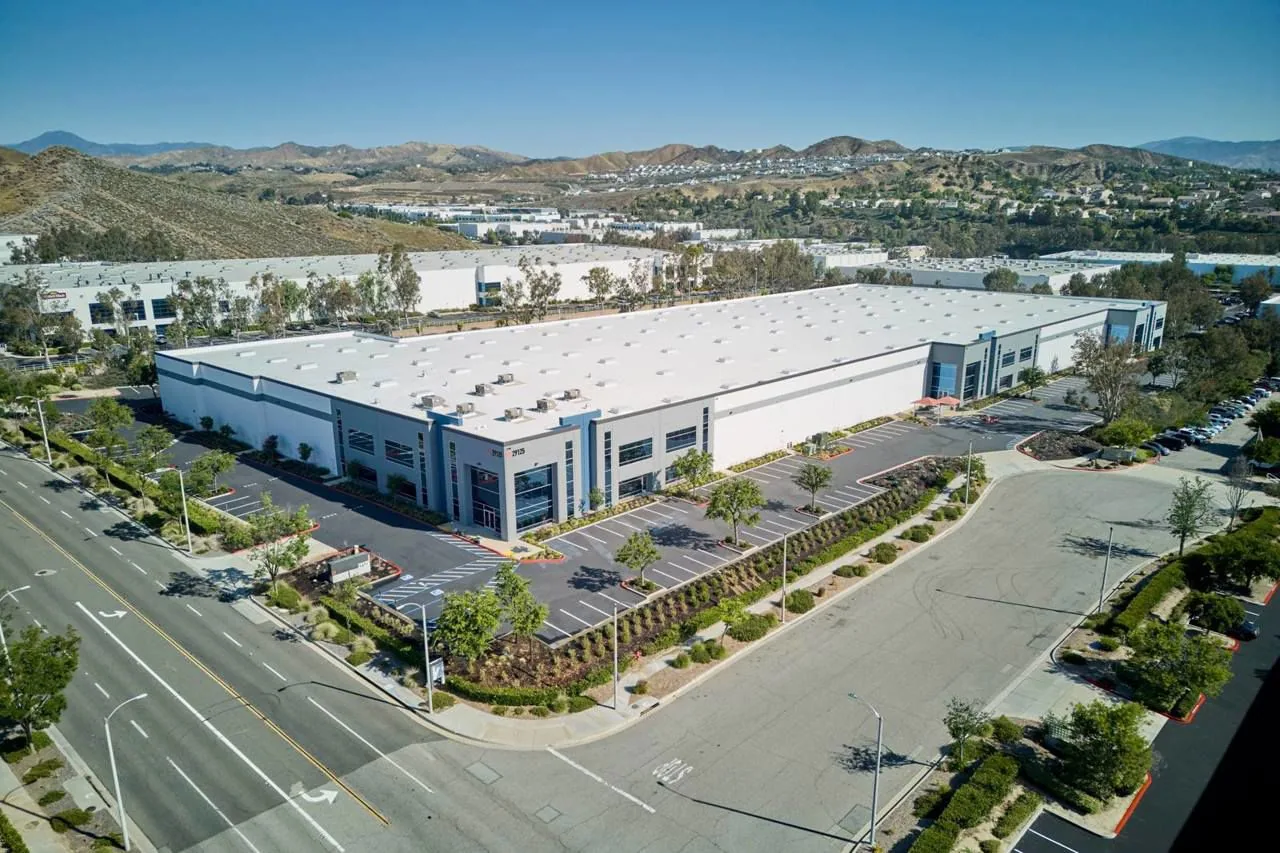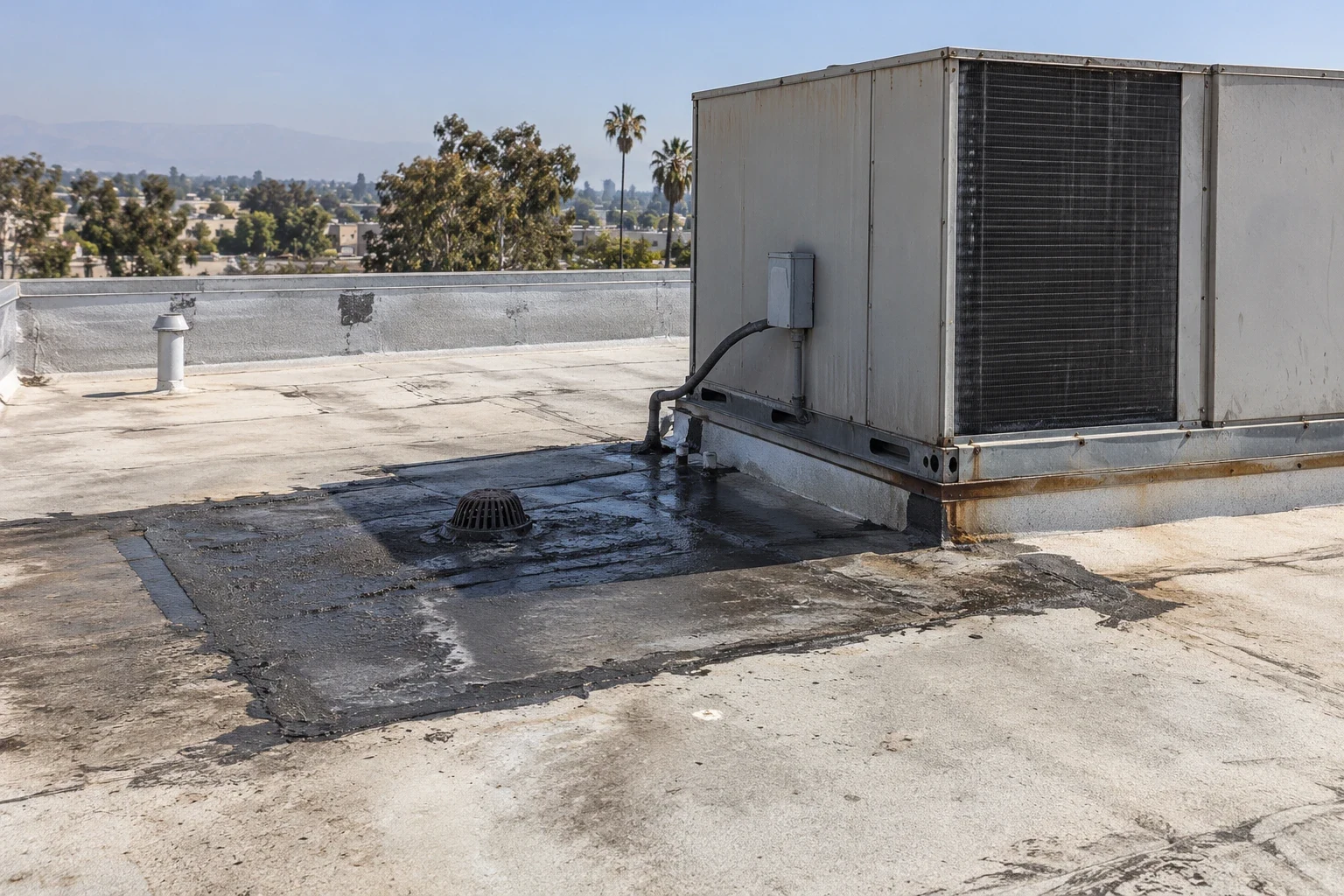

A flashing failure is a question about a connection. The roof has to meet a wall, curb or other component with materials and attachment suited to that detail. In Santa Clarita, CA, summer heat and cooler-season rain make an earlier examination useful. The actual connection establishes the repair.
Commercial Roofing Santa Clarita investigates damaged roof flashing and plans compatible corrections. We identify the membrane, accessible substrate and adjoining component. The owner receives the finding, proposed work and any further assessment required.
Send photographs and earlier repair information if available. Tell us about reported water entry or a recent component change. We use those records with the site examination. A split sealant joint and a failed membrane termination may need different tasks, even when they appear close together.
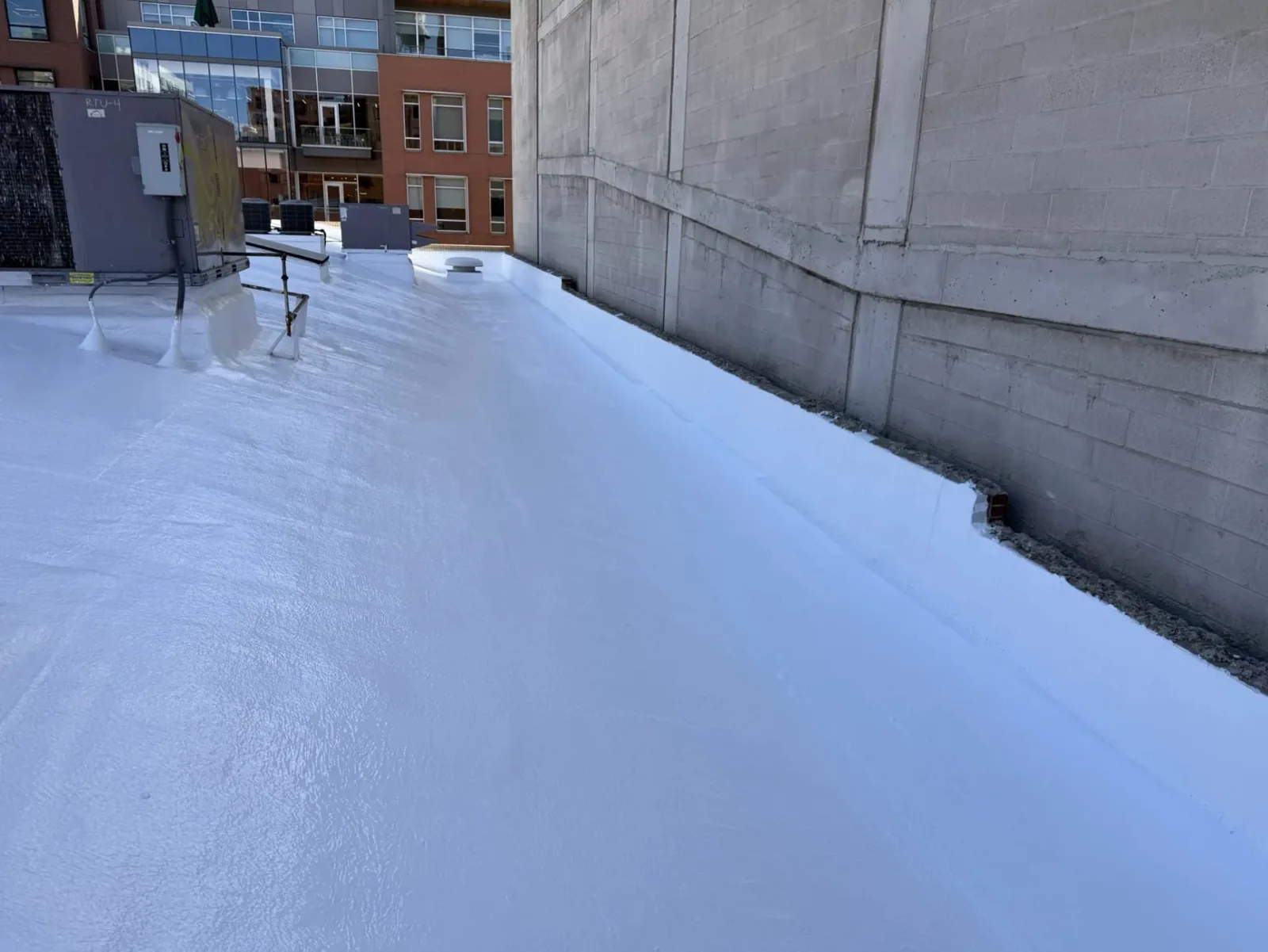
Start with the roof system and the component it meets. The membrane, flashing material, termination and accessible substrate help establish the construction. Earlier patches may obscure part of that detail. Record what can be examined and any opening needed for more evidence.
Penetration flashing work coordinates pipes, curbs and skylights with the actual roof. Wall connections may involve another material or responsible trade. The scope should identify that interface before selecting the correction.
The owner should know whether the task is a localized repair or a detail rebuild. Preparation, removal and supporting work need to be described. A surface patch price alone may not include the condition behind the flashing.
Material movement, attachment, substrate condition and earlier construction can affect a termination. The visible opening guides examination. It does not establish one universal mechanism. We compare the adjoining materials and accessible connection.
Temperature changes and wind exposure are useful planning context, but the actual findings determine the method. The repair should explain which material or attachment concern is being corrected. If another component is moving or deteriorated, identify its required review.
A roof inspection can locate related findings around the building. It records accessible condition and limits. An isolated flashing defect may prompt further examination without proving every surrounding detail has failed.
Locate the affected room and describe the timing and observation. Earlier repairs and equipment activity may be relevant. Water can follow concealed surfaces before appearing below. The roof detail nearest the stain is a search location, rather than an automatic source diagnosis.
Leak investigation examines the path with the roof layout and accessible evidence. Suitable testing may help answer a defined question where authorized. The method needs controls for the assembly and affected space.
The findings should distinguish supported entry concerns from remaining uncertainty. Equipment or interior moisture questions may require another qualified party. We identify those interfaces so the owner can arrange the next assessment with the purpose clear.
Identify the existing material and select an eligible correction. Cleaning, preparation, attachment and termination procedures need the relevant system information. A product chosen merely because it resembles an old patch may not suit the assembly.
Commercial repair should describe removal and new material at the detail. If supporting layers are unsuitable, the scope identifies their assessment and correction. Authorized openings need a suitable closure plan before they are made.
Keep the repaired boundary traceable. Where new findings extend the task, photograph the condition and explain the proposed revision. The agreed approval route governs additional work. The owner should see why the final scope differs from the initial observation.
Locate the detail in the completion photographs and describe the work performed. Relevant checks and installed-material information belong with the accepted scope. An unresolved component question needs a next action and responsible contact.
Later service activity can change the repaired interface. The equipment or maintenance team should receive relevant roofing details. Report new water entry or visible movement so the next examination can compare the same location with the completed work.
Keep approved changes, manufacturer procedures and earlier findings together. Another manager can then understand the repair without reconstructing it from an invoice description. The file should show the observed condition, authorized correction and remaining assessment.
Use the same location reference on the original report and final record. That makes the next inspection easier to organize and helps the owner distinguish a new concern from the detail already repaired.
Retain the accepted preparation and closure information. If an opening revealed different materials, keep that finding with the reconstruction record. It provides useful assembly evidence for another roof task at the same component.
Coping and edge metal can share a wall interface with roof flashing. The accessible metal, joints and supporting attachment should be considered together. A leak below a parapet may need examination of more than the roof face alone.
Equipment curbs and supports may involve qualified structural, mechanical and electrical parties. The roofing task identifies the surrounding reconstruction. The accepted sequence should show who handles the component and who checks the restored roof interface.
Required equipment or HVAC control needs a planned operator window. Fire systems remain under responsible qualified management. The roof task should fit those arrangements rather than introduce an unplanned operating change while the detail is open.
Added material can change curb exposure, wall transitions and outlet heights. A proposed recover needs those interfaces included in its eligibility and construction review. The new layer arrangement should show the finished roof relationship with each component.
Relevant project requirements need assessment for the actual scope. Santa Clarita publishes current California codes and local amendments. Confirm jurisdiction and submission basis. Fire, energy and property-specific provisions concern the complete assembly and alteration.
Warranty terms need document-specific review. Manufacturer acceptance and required procedures should be identified before changing the detail. Keep accepted drawings and revisions available to the crew and within the owner roof file.
Industrial operators at Valencia Industrial Center should identify equipment and receiving contacts. The actual roof route and restricted areas establish access for the proposed detail work.
At commercial properties in Newhall, shared entrances and neighboring storefronts may affect staging. We arrange the visit with the manager and identify spaces below the work. The operator supplies the confirmed requirements.
Summer heat and winter rain influence suitable scheduling in Santa Clarita. Product procedures and current conditions govern the actual application. If weather or newly revealed findings change the work, record the reason and proposed next task.
Examine the adjoining membrane seam and any sheet puncture before defining the detail boundary. Each confirmed defect needs suitable preparation and joining construction. The scope should locate those additional tasks rather than leave the owner with a finished vertical junction beside an uncorrected field opening.
It is a condition to examine. The adjoining material, attachment and component may need assessment before the complete correction is selected.
Identify the actual system and surface condition first. Compatible preparation and component procedures should fit that assembly.
Document the finding and define the required assessment or correction. The approved scope should explain reconstruction and any qualified trade interface.
The responsible operator and qualified teams arrange necessary windows and procedures. The roofing task should follow that accepted plan.
Keep located photographs, installed materials and relevant checks with the approved scope. Identify unresolved items and any later component change clearly.
Call Commercial Roofing Santa Clarita with the affected detail and roof records. We will examine the interface and explain the compatible reconstruction needed.
Pages that connect with Flashing Failure Repair for Santa Clarita Valley buildings.
Notifications