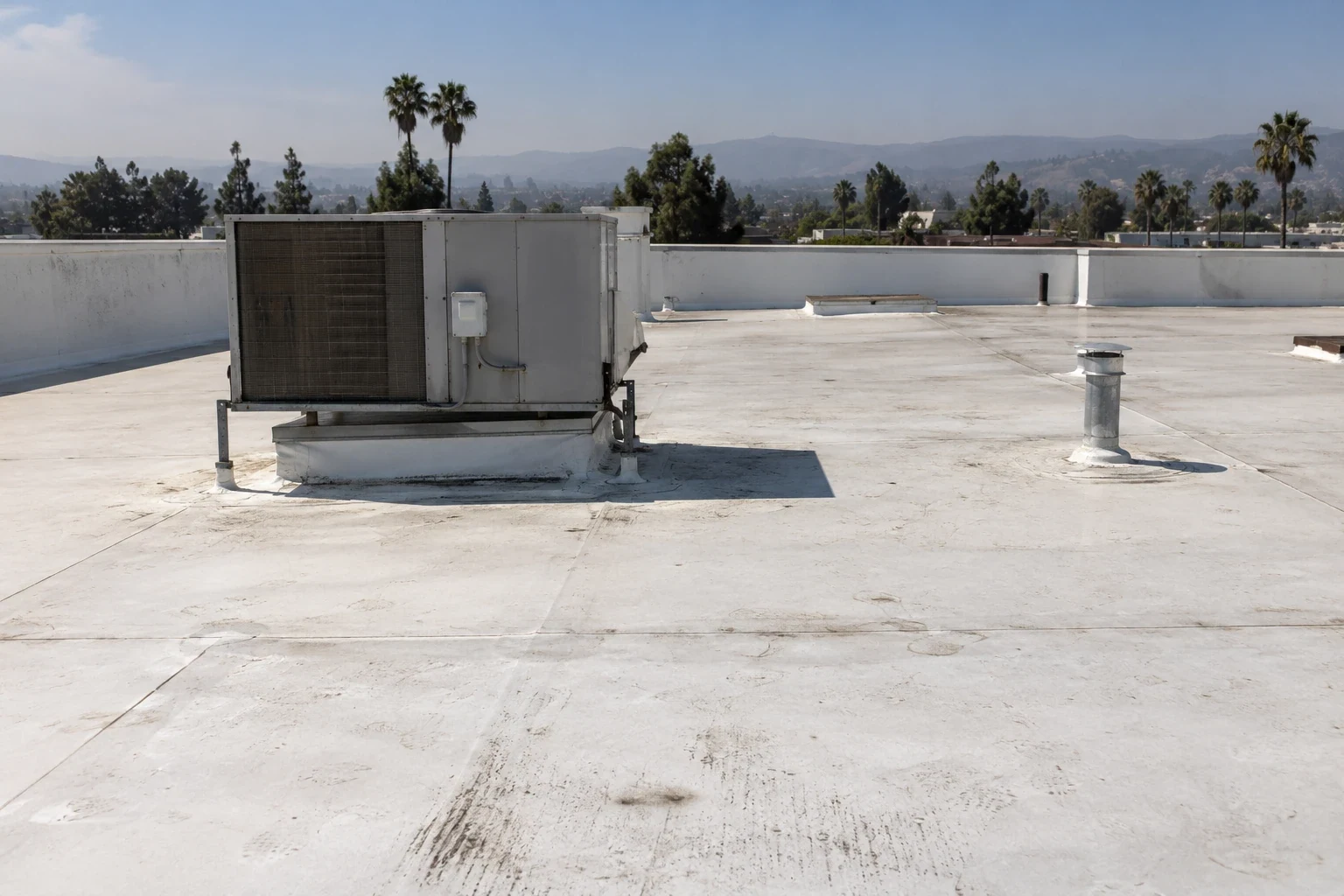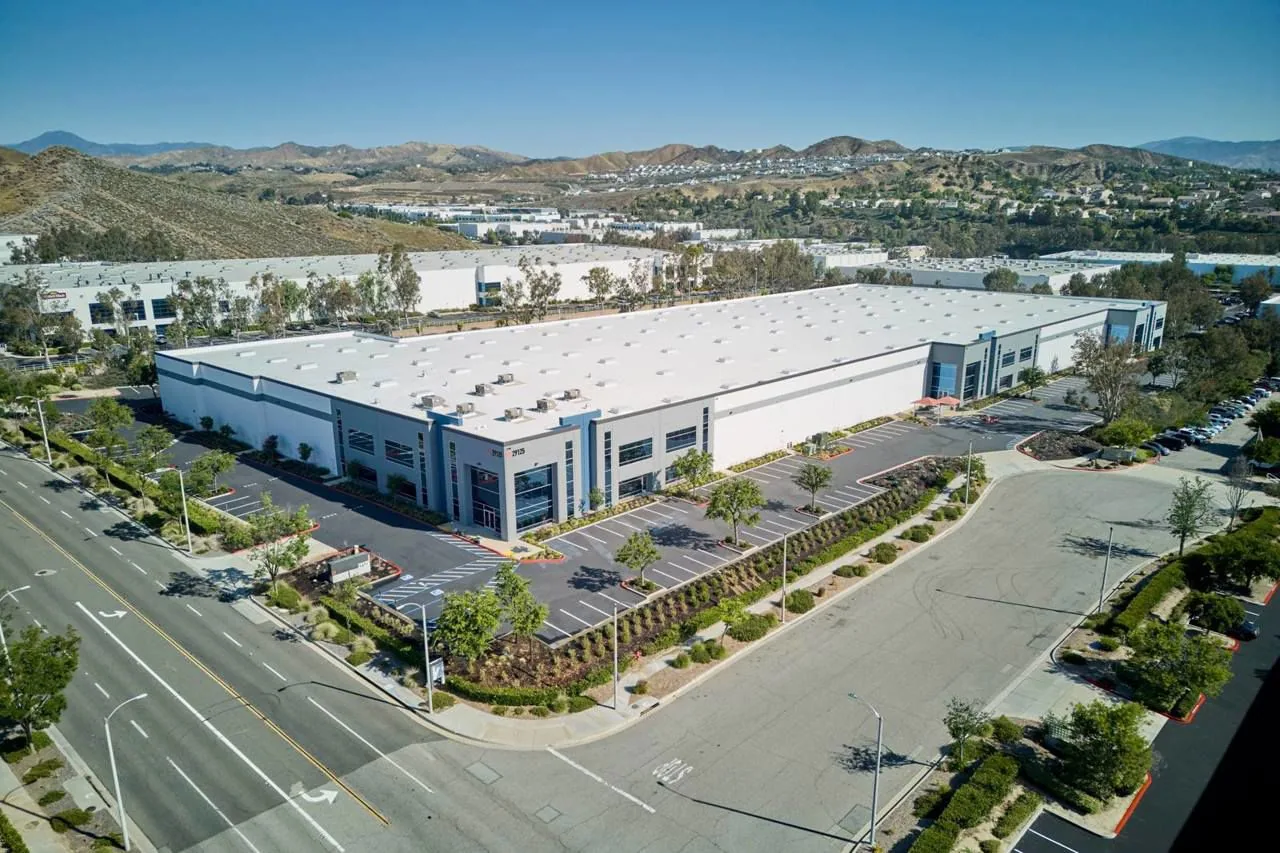

Summer heat is a useful reason to inspect a Santa Clarita, CA roof before winter rain. It is not a replacement diagnosis. We examine the installed material, details and relevant hidden conditions. Commercial Roofing Santa Clarita gives you the findings and a defined construction choice.
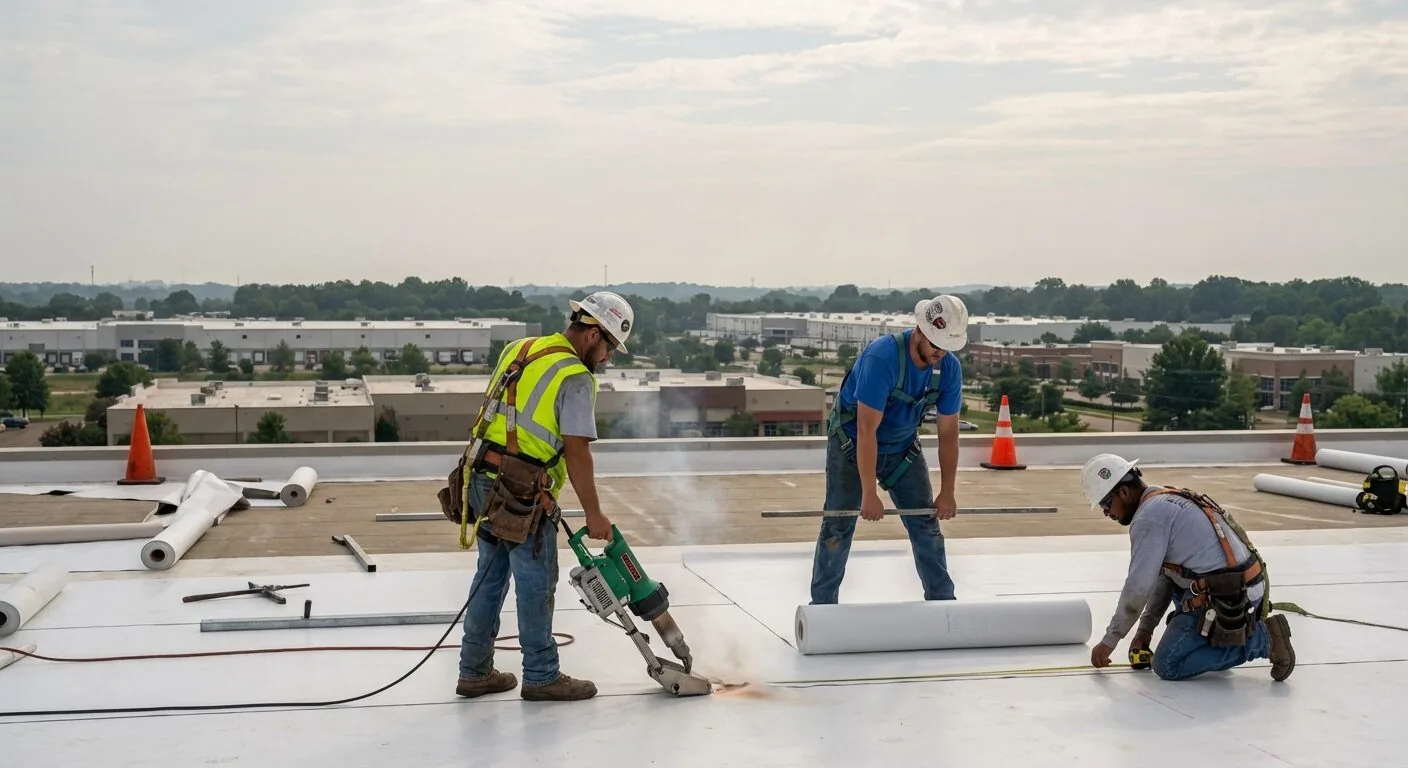
Replacement removes the roof construction named in the scope and installs a new assembly suited to the project. The supporting deck and details need evaluation. We identify what can remain and what needs correction before the new layers are installed.
For properties in Valencia Industrial Center, establish the actual roof access and loading arrangements early. McBean Parkway office and medical projects need their own operating contacts. The building plan and selected work method guide the phase, not the business-park label.
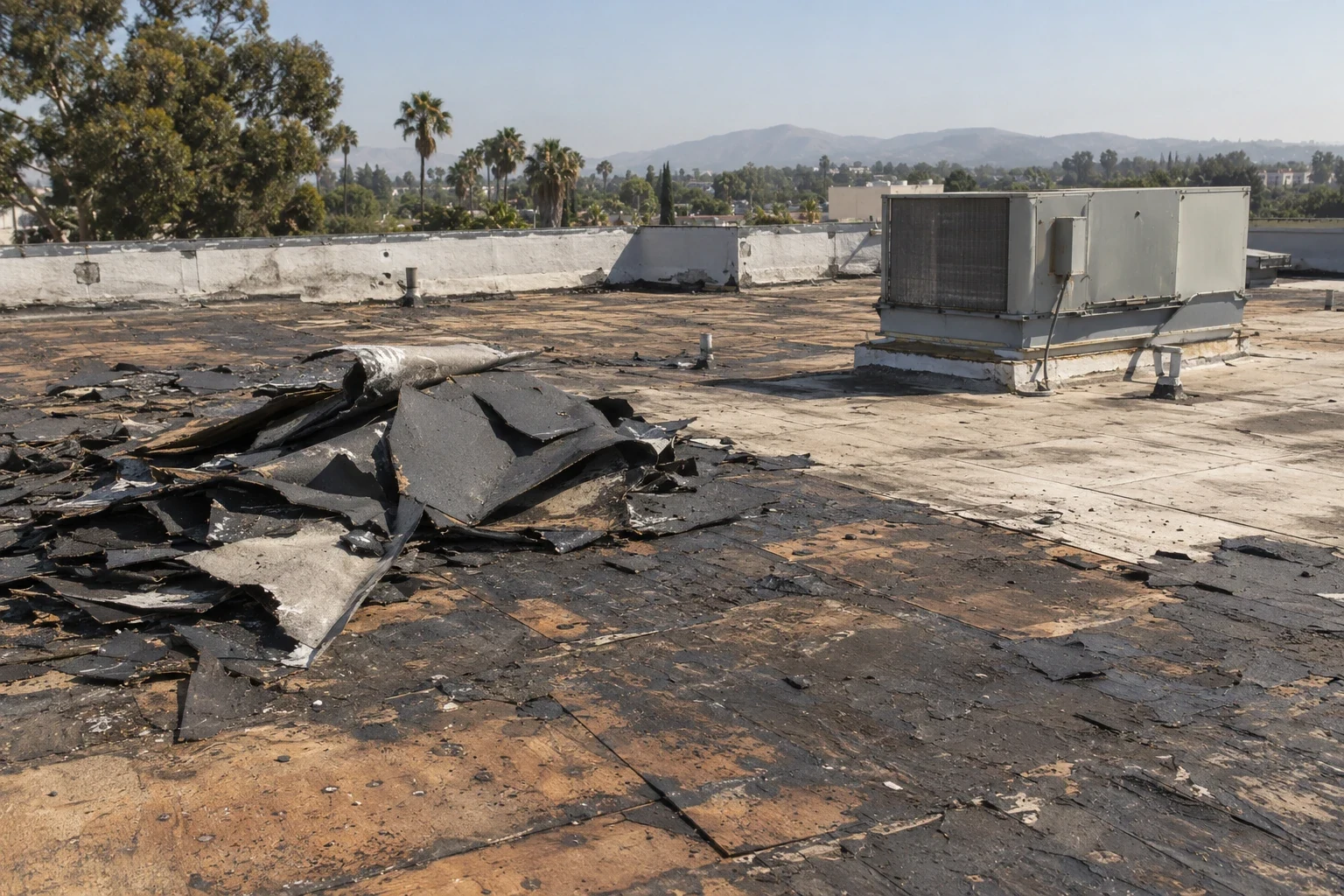
We locate recurring leaks and visible defects. Then we examine what the findings mean for the assembly. Several leaks do not automatically prove that the field membrane is beyond repair. Chalking or discoloration also needs material-specific interpretation.
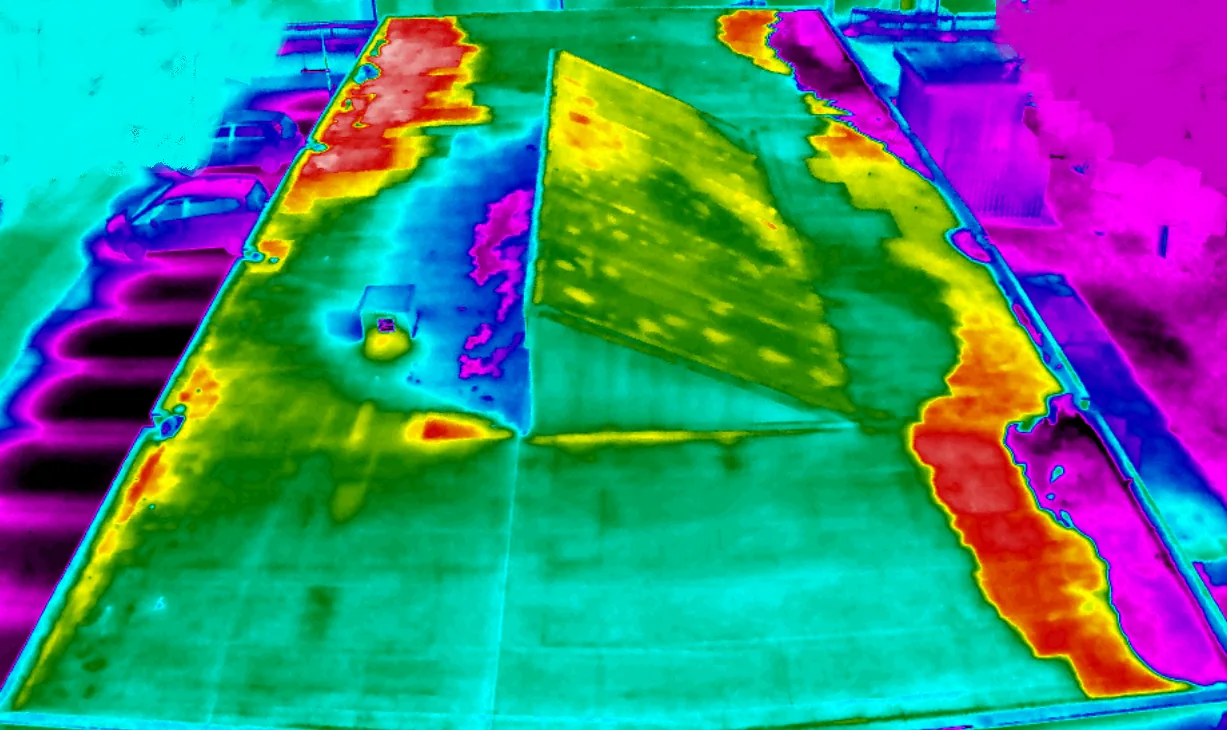
Hidden moisture or attachment may affect the choice. An infrared evaluation can identify interpreted thermal patterns under suitable conditions. Appropriate confirmation and other assembly information establish what those patterns support. Samples describe their tested locations.
A defined repair may meet the objective where suitable construction can remain. Replacement comparison is useful when the condition and project requirements justify it. We explain the evidence, proposed limits and next decision, with investigations separated from settled quantities.
Santa Clarita summer highs average roughly 90 to 95 degrees Fahrenheit. The city recorded 118 degrees on July 5, 2024. Those climate facts help plan inspection and material handling. The actual roof still needs evaluation.
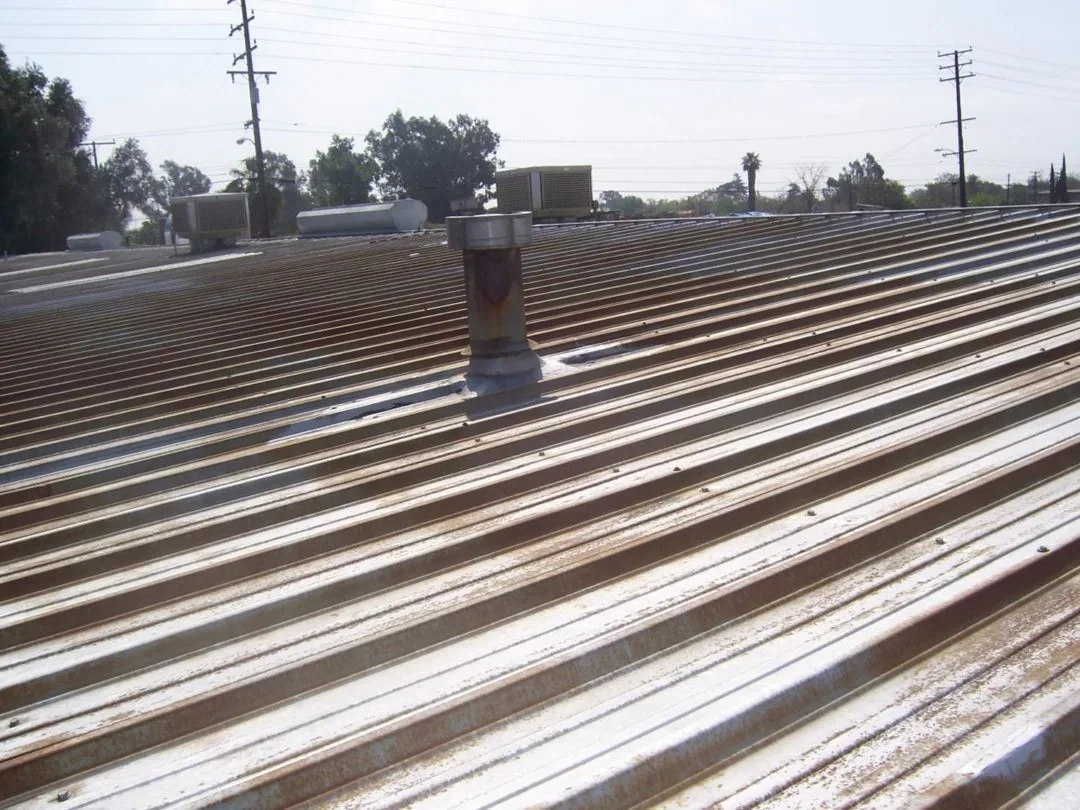
Different membranes and protective surfaces respond differently to exposure. An observed crack, open detail or worn coating gives us a location to examine. It does not establish every layer below it or a universal age limit for the roof.
For heat and UV concerns, we identify the material and retained condition first. Product requirements guide compatible repairs or protective work. A surface description alone cannot choose the whole capital scope.
Keep available installation and repair documents with the condition photographs. They help distinguish a material observation from an assumption about the assembly. Where the record is incomplete, we identify the investigation needed for the construction decision.
Removal lets the project examine the defined supporting construction. It also creates work around details, equipment and operating areas. We carry those tasks in the scope and identify how new findings are evaluated and authorized.
A recover option retains evaluated construction and adds the selected assembly. Moisture condition is one factor. Supporting capacity, attachment, layer arrangement, compatibility and applicable criteria matter too. A single sample does not decide the whole roof.
We compare suitable alternatives against the building objective. The estimate shows preparation, retained assumptions and service obligations. When removal exposes damaged material, we document the location and proposed correction before the approved scope expands. You can see the price and timing effect as a concrete decision.
Santa Clarita lists 2025 California codes and city amendments for projects submitted on or after January 1, 2026. Earlier submissions use the listed 2022 code route. Confirm the applicable project requirements with the responsible permitting team.
The current city roof classification table names a minimum Class B unless the California Wildland-Urban Interface Code requires otherwise. The actual property's fire-hazard and WUI applicability needs review. A hill location alone does not settle every requirement or exception.
City section 1512.6 calls for inspection after removal of existing coverings, or before new material is installed on a recover. Damaged deck or framing must be corrected before that inspection. Identify the review and inspection steps in the work plan before material ordering and field closure.
Other assembly, drainage and equipment requirements also belong in the project review. A roof classification is not the entire specification. Assign the relevant design and trade responsibilities so the accepted scope answers the building questions.
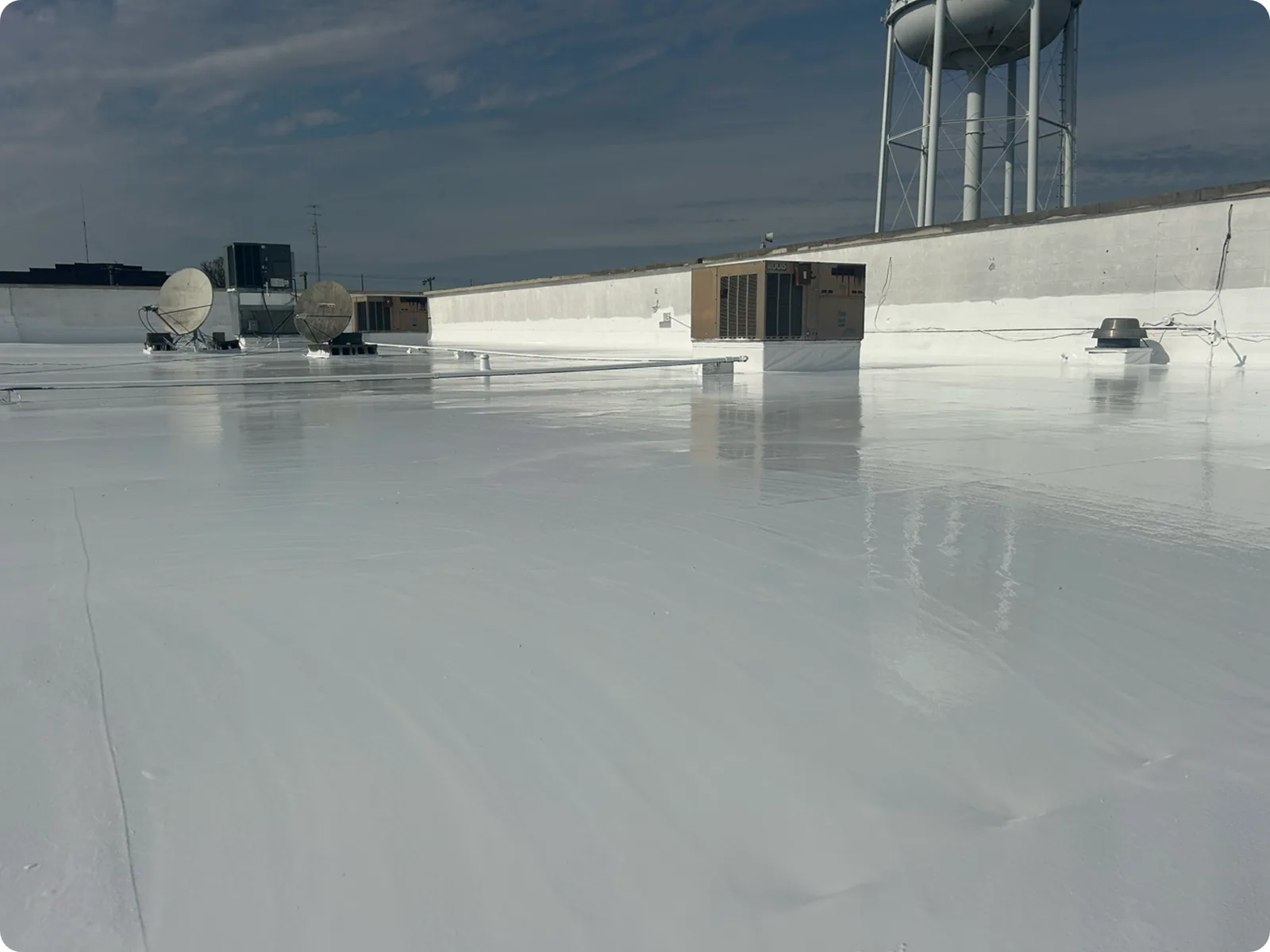
We identify the building objective and the roof conditions. Supporting layers, attachment, drainage and details need a coordinated choice. A reflective TPO assembly is one option where the project requirements suit it. Other materials receive their own evaluation.
Equipment discharge or contaminants need actual site information. Product suitability depends on the selected membrane and exposure conditions. A PVC description is not unlimited chemical resistance, and a material name cannot replace the component review.
We use condition records to connect the options with the findings. The proposal names the assembly, measured work, allowances and unresolved tasks. You can compare the construction basis rather than choose from product names alone. Keep accepted submittals and inspection responsibilities with the current scope. When an assembly changes, identify the revised preparation, detail and operating tasks before ordering.
The operator supplies the actual work windows and restrictions. We coordinate them with the selected method, materials and qualified trades. Aerospace, office and medical uses need building-specific arrangements, not an assumption that every facility can stay open through every task.
For occupied reroofing, define suitable sections and protection for unfinished conditions. Closure depends on the required details and actual readiness. Do not assign an automatic same-day dry-in to every opened area.
At Rye Canyon Business Park, coordinate material routes, tenant notices and equipment-service contacts for the project property. Qualified trades establish necessary HVAC or electrical operating changes through an approved plan. The roof crew follows that window and its restoration checks.
When weather or a new finding changes the sequence, update management and the trade plan together. Record the current status and next action. The owner should know what remains unfinished and who is arranging follow-up.
Before choosing a full replacement, ask what the investigation establishes about the deck and assembly below the visible surface. Compare alternatives over the same measured roof areas, with removal, disposal, insulation, edge details and penetrations identified where they affect scope. If a recover remains under consideration, state its eligibility separately so it does not obscure what tear-off could reveal. Set a review point for concealed conditions, including who will measure, photograph and price a correction before work proceeds. The proposal should separate confirmed quantities from allowances and name the inspection or approval steps that control closure.
The accepted assembly, procurement, access and qualified trade tasks determine readiness. Suitable installation conditions matter too. We identify those dependencies before assigning the work phase.
Review the actual fire-hazard and WUI applicability with the responsible team. The city classification and any additional requirements belong in the project documents before materials are selected.
Evaluate the actual details, leakage and retained-condition questions. We explain the finding and next review or repair. Color change or a quiet period without rain does not settle the assembly condition.
Establish the requirements for the actual scope with the permitting authority. Include the city inspection before new material proceeds, along with the relevant project review and supporting-construction corrections.
A defined partial scope needs suitable retained construction and compatible transitions. We evaluate the boundaries and resulting details before comparing it with a broader project. The price follows that construction.
Call Commercial Roofing Santa Clarita for a condition review and defined roof options. Plan the investigation and suitable construction before the next winter rain or fire season.
Pages that connect with Commercial Roof Replacement for Santa Clarita Valley buildings.
Notifications