
Standing water deserves a located observation and a search for its cause. Cleaning an outlet and changing roof geometry are different jobs. In Santa Clarita, CA, cooler-season rain can make the concern visible. An assessment before the next construction project helps the owner understand which correction is needed.
Commercial Roofing Santa Clarita examines accessible water paths and surrounding roof details. We record the location, outlet condition and relevant geometry questions. The recommendation separates cleaning, localized repair and work requiring design or another qualified trade.
Tell us when the water was observed and provide safe photographs if available. Bring roof plans and earlier drainage information. We use those records with the actual assembly, rather than select a correction from the appearance of one wet area alone.
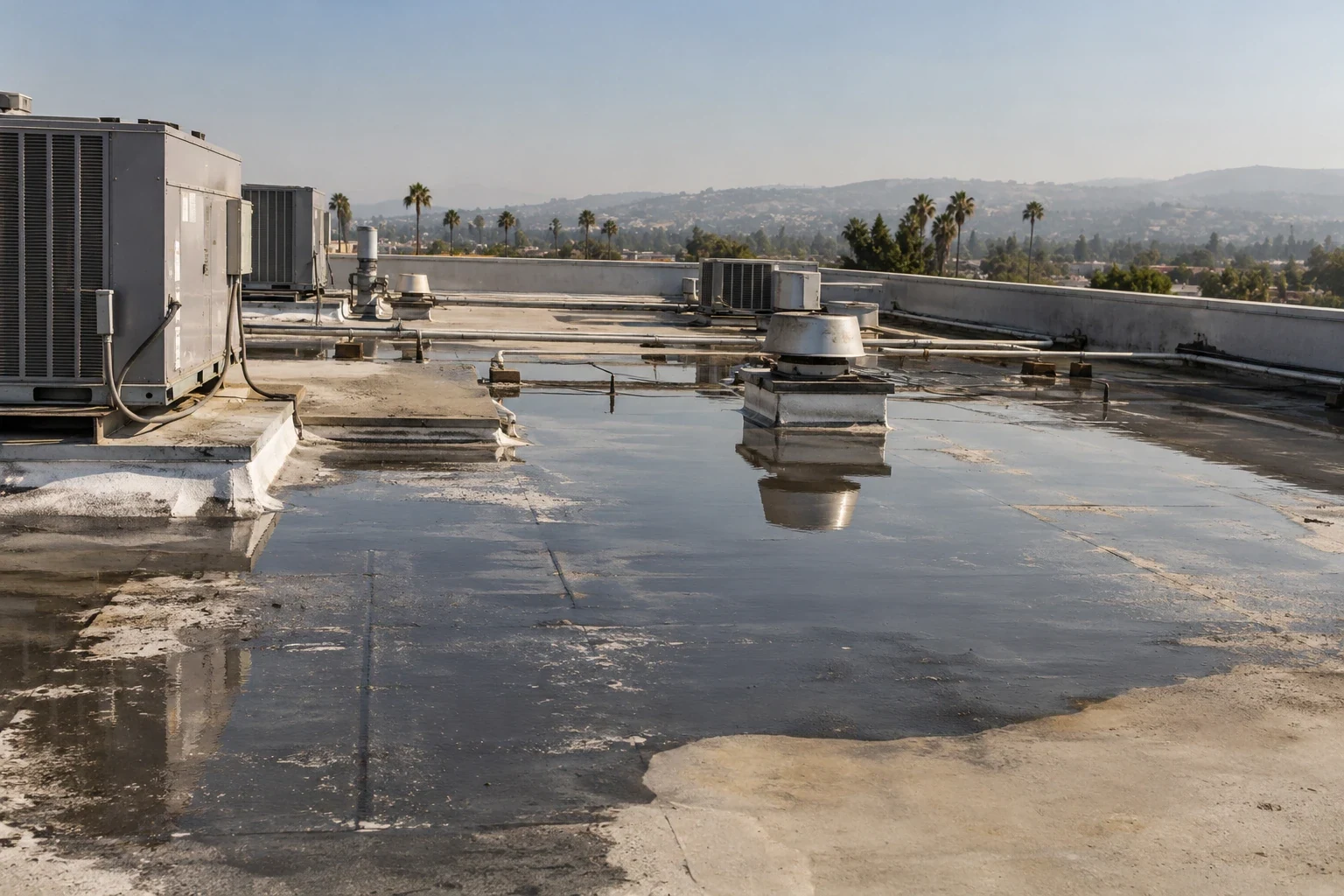
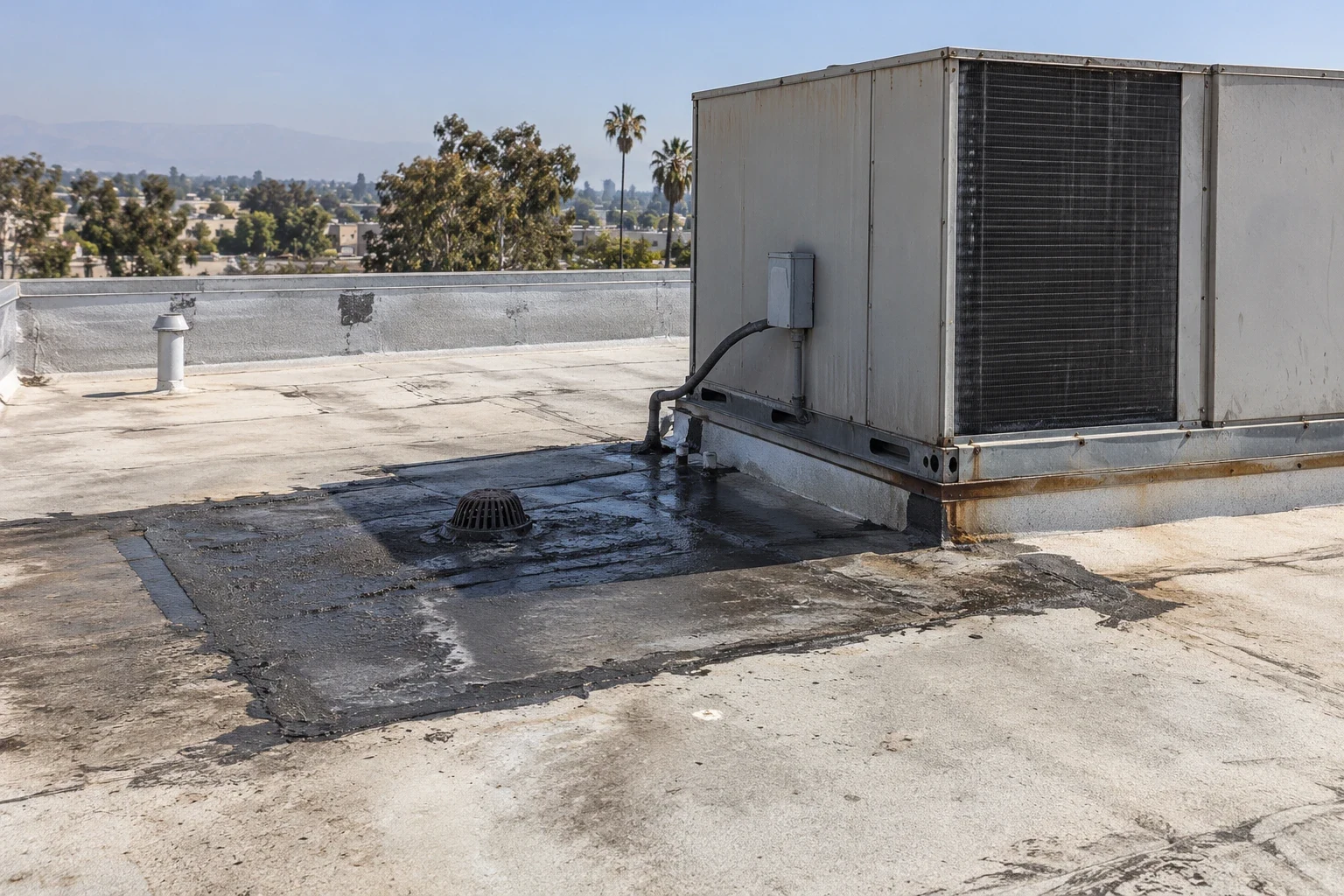
Locate the area and note the relevant weather and observation time. Depth or a photograph can help describe the condition, but neither establishes every cause or structural question. The examination needs the roof layout and outlet arrangement.
Keep earlier images for comparison. A changed water path can follow debris movement, a component alteration or another condition needing assessment. Report recent equipment and roof work. These clues help select the examination area without settling the diagnosis.
A roof inspection documents accessible findings and limits. Identify unexamined areas and any next measurement required. The owner should see what the evidence supports before a drainage change is priced.
Debris at an accessible drain or scupper can obstruct flow. Suitable removal and disposal may address that condition. The work should identify the outlet and record the task performed. Moving debris nearby leaves a question about whether it will return to the same opening.
Drains and scuppers need their adjoining roof details examined as well. A clear opening does not establish that concealed piping or the whole discharge arrangement is sound. Other qualified trades may need to assess those components.
If standing water remains, record the location and the next question. Geometry, an outlet connection or another restriction may require further examination. Cleaning should not be presented as a drainage redesign when that work has not been assessed.
The relevant roof dimensions and outlet locations need measurement suitable for the task. The proposed water path should be understood before material is added or an opening is changed. A low-looking area alone does not establish deck settlement or its cause.
Structural questions require qualified review where indicated. The roof team documents accessible observations and identifies the interface. A surface survey cannot establish every concealed framing condition. The owner should know whether another assessment is needed before construction.
Insulation and cover board may form part of a designed correction. A tapered arrangement must suit the complete drainage plan and assembly. Identify its outlet and detail changes within the scope, rather than assume extra material resolves every standing-water concern.
Identify the membrane and its condition. Splits, open laps or damaged flashing need compatible examination and repair. Standing water does not establish that every membrane softens or fails in the same way. The actual product and findings matter.
Commercial repair addresses supported defects with a defined method. Concealed moisture or deterioration may need an authorized opening. Record the examined materials and suitable reconstruction, with remaining uncertainty clear.
If interior water entry is reported, leak investigation should examine its path. The standing-water location may be relevant, but the room symptom still needs evidence. Another component or entry route can require its own assessment.
A coating does not automatically change the roof geometry or outlet arrangement. The selected product must be eligible for the intended conditions. Any drainage concern still needs its cause examined and the relevant correction defined.
Coating restoration may be part of a suitable roof scope after repairs and preparation. Its actual requirements govern substrate and exposure suitability. Do not assign universal ponding tolerance to a broad material family.
A recover likewise needs drainage included in the eligibility review. Added layers can change outlet transitions and curb exposure. The complete proposed assembly should show how those interfaces are handled before construction is approved.
Santa Clarita has hot summers and cooler-season rain. Earlier inspection can leave time for design, material selection and access coordination before winter work. The roof and product conditions determine the actual construction window.
At Valencia Commerce Center, industrial receiving and equipment contacts should join the access discussion. The park is northwest of the State Route 126 and Interstate 5 junction. The actual building supplies the roof route and operating restrictions.
Commercial properties in Newhall may have shared entrances and neighboring storefront activity. We coordinate staging with the manager. Any equipment control needed for the task requires the responsible operator and a planned window.
Identify the original concern, measured information and proposed water path. The scope should show cleaning, roofing work and any design or trade interfaces separately. Applicable project requirements need their relevant review.
Santa Clarita publishes current California codes and local amendments. Confirm authority, submission basis and actual scope. Drainage changes and roofing alterations should fit the requirements that apply to the complete project.
Keep accepted details, approved changes and completed checks together. Locate the work with photographs. If new findings alter the scope, retain the reason and authorization so another reviewer can understand the final quantity.
Follow-up observations should use the same area references. Report new standing water, overflow or interior symptoms. The next assessment can then compare the condition with the original evidence and installed correction.
Warranty and maintenance requirements depend on the actual documents and materials. Retain relevant manufacturer procedures. Later equipment or roof changes should account for the intended water path instead of altering it without coordination.
Assign outstanding items to a contact and next action. If piping, structural assessment or another measurement remains pending, keep that task visible. The owner should understand which part of the concern has been addressed and which question still needs evidence.
Give the final details to the maintenance team. Outlet locations and repair photographs help staff recognize the same area during future checks. The approved water-path information also supports a clearer review when another roof layer or component is proposed.
Locate any confirmed seam separation or flashing opening within the retained-water area. Its entry correction and the drainage task may have different causes and participants. Keep their proposed work identifiable, then record which observations support the completed connection and which question remains with the water-path review.
Water remaining at a low area can result from more than one condition, so trace the surrounding drainage route before selecting a repair. Check accessible outlets, obstructions, transitions and the roof surface after an appropriate opportunity for drainage. Record when the water was observed and the conditions at the time; one image does not establish slope, structural movement or the source of a blockage. Separate cleaning, outlet repair and work that would alter roof geometry. The owner should see which cause is supported, what remains unresolved and whether follow-up observation is needed after the correction.
It identifies a condition to investigate. Geometry, outlets and supporting construction need suitable assessment before a cause is concluded.
It may address an accessible obstruction. Record the result and identify any remaining drainage question before recommending wider construction.
The complete roof geometry, outlet arrangement and accepted design support it. The scope should include relevant transitions and assembly requirements.
The drainage cause still needs assessment. Use actual product requirements for intended exposure and define any separate correction needed.
Use the same roof-area locations and note relevant weather and timing. Keep the record with the installed details and pending assessment items.
Call Commercial Roofing Santa Clarita with the standing-water location and roof records. We will examine the path and distinguish cleaning, repair and designed drainage work.
Pages that connect with Ponding Water Roof Repair for Santa Clarita Valley buildings.
Notifications