
A roof outlet is easy to overlook until rain arrives. Debris at the opening, a damaged connection or a poorly formed transition can each need a different correction. Santa Clarita, CA receives much of its rain in the cooler months. Checking outlets beforehand leaves time to identify which work your building actually needs.
Commercial Roofing Santa Clarita examines accessible drains and scuppers with their adjoining roof details. We separate cleaning from membrane repair and from work that needs a plumbing or design review. The recommendation locates the concern and explains the next action.
Tell us where standing water or interior symptoms have been reported. Earlier photographs and roof plans can help. The inspection uses those clues with the condition found on the roof. An outlet that looks clear from above may still have another question to resolve.
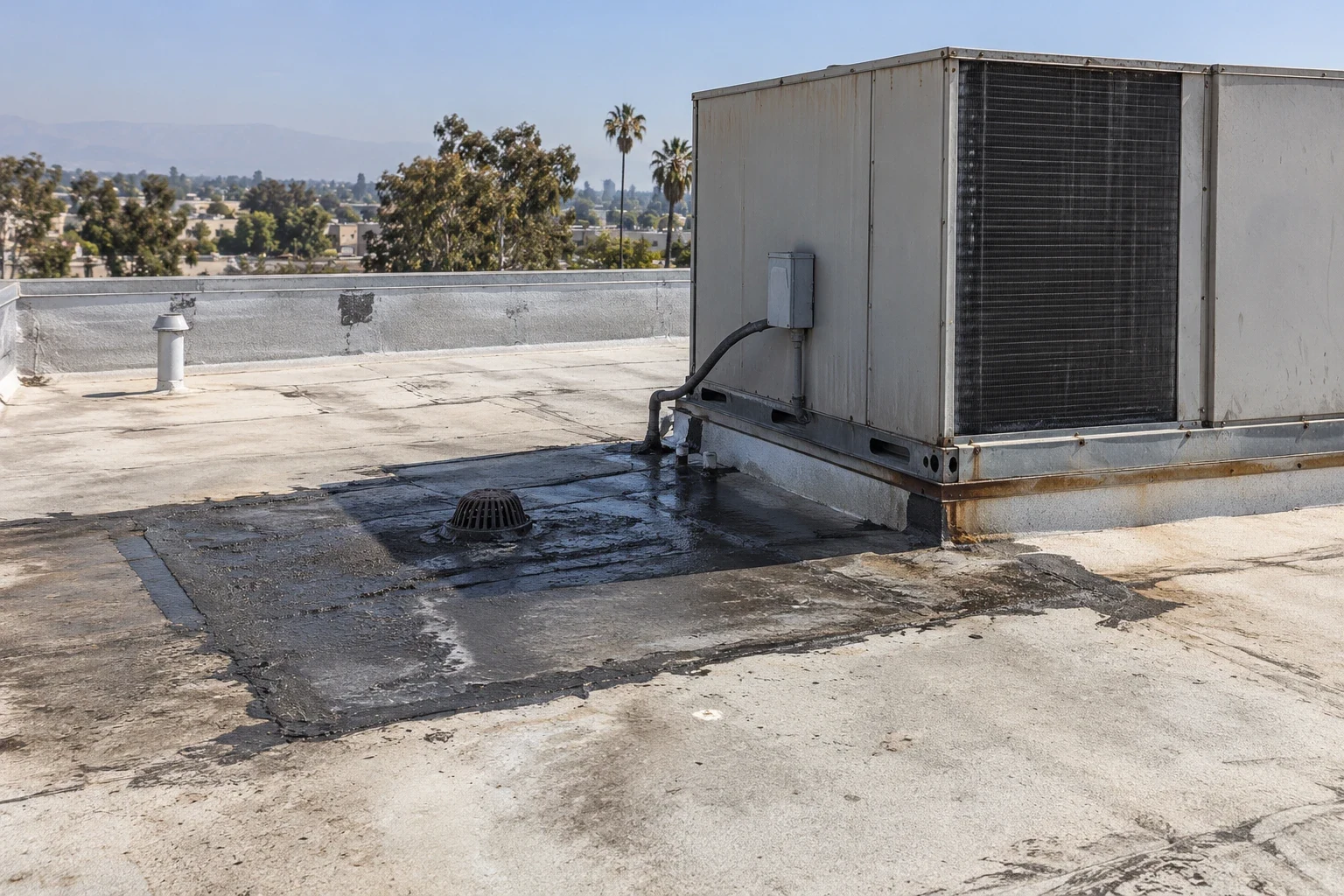
Start with the outlet and its approach. Leaves, loose debris and other material can interrupt the intended flow. We look at the accessible opening and nearby roof surface. The work plan identifies suitable removal and disposal so debris is not left to return to the same place.
We also examine visible strainers, drain rings and scupper transitions where present. Missing or damaged components need identification before replacement. A part selected by appearance alone may not suit the existing drain or assembly.
A roof inspection can locate these findings across the building. The record identifies which outlets were accessible and what was observed. If the issue extends into concealed piping or another system, further work needs the responsible qualified trade.
If water remains after the accessible obstruction is removed, the geometry or outlet arrangement may need assessment. A damaged connection or another restriction can also be involved. We identify the observed condition and the examination needed to separate those possibilities.
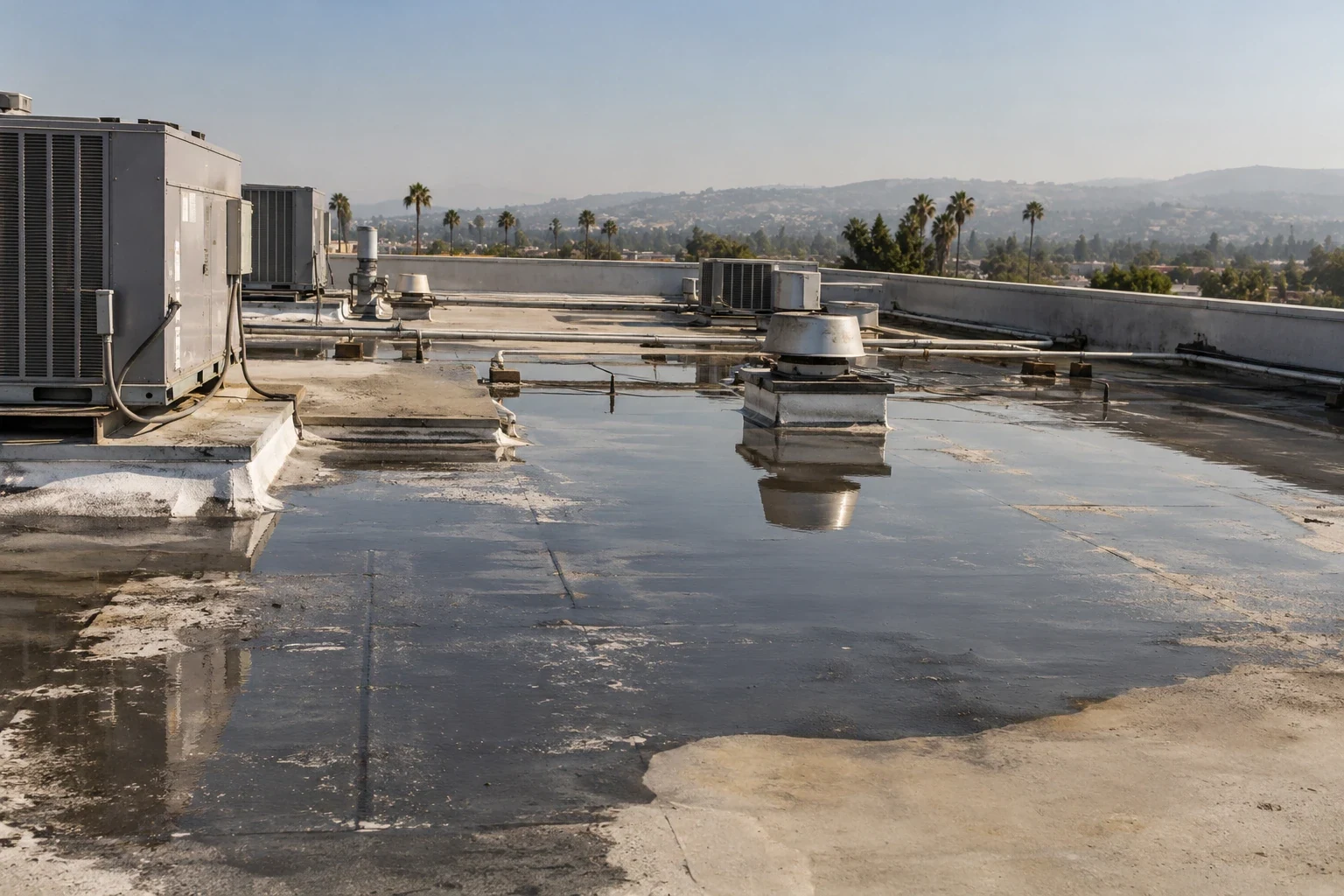
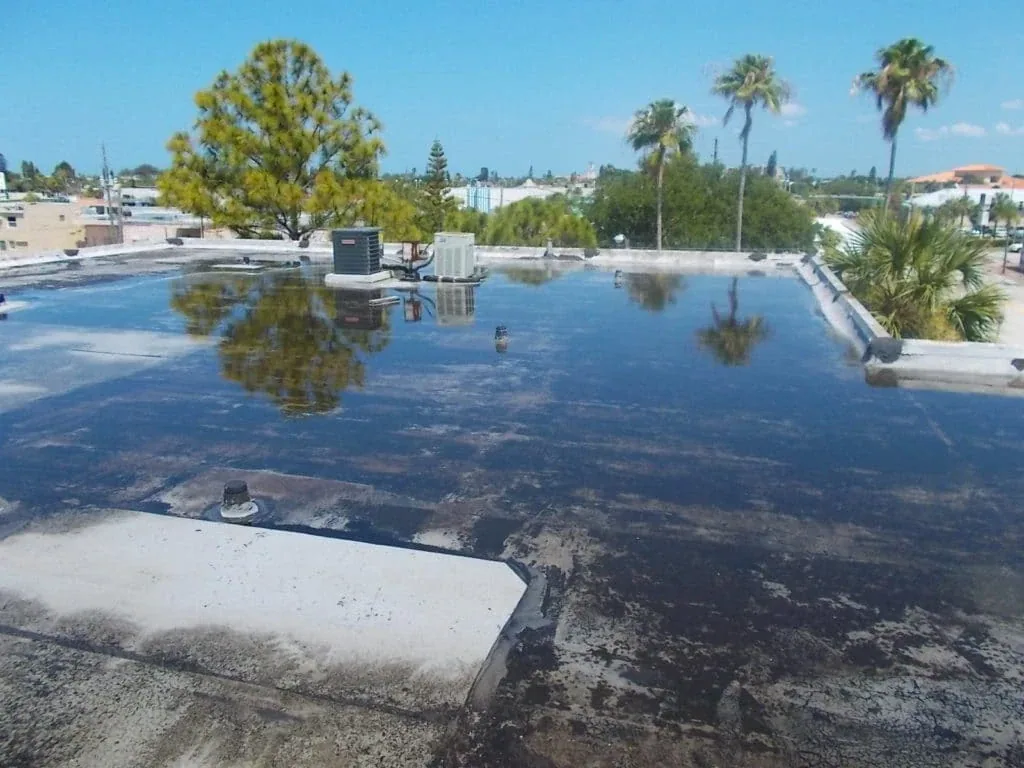
Standing water does not tell you its cause by itself. Photograph the location when it can be done safely and note the recent rain. The roof layout, drainage path and timing help frame the question. Ponding water repair evaluates the correction when the concern goes beyond cleaning.
Changing an outlet or adding slope needs a defined design. The new path must account for the complete drainage arrangement and applicable requirements. We coordinate those interfaces before turning a cleaning visit into unplanned construction.
The outlet detail joins the roof covering to a component that must move water. We examine the accessible flashing and attachment. A split, loose termination or incompatible old repair can need a material-specific correction. The chosen method should suit the actual roof system.
Flashing repairs address transitions where the covering meets another component. At a drain or scupper, the repair also needs to preserve the intended opening and water path. Adding material without checking that path can create another concern.
Where wet or deteriorated underlying materials are suspected, the scope may need an authorized opening. We plan suitable closure and any further assessment. The report explains the condition established at the opening and the limits of what was examined.
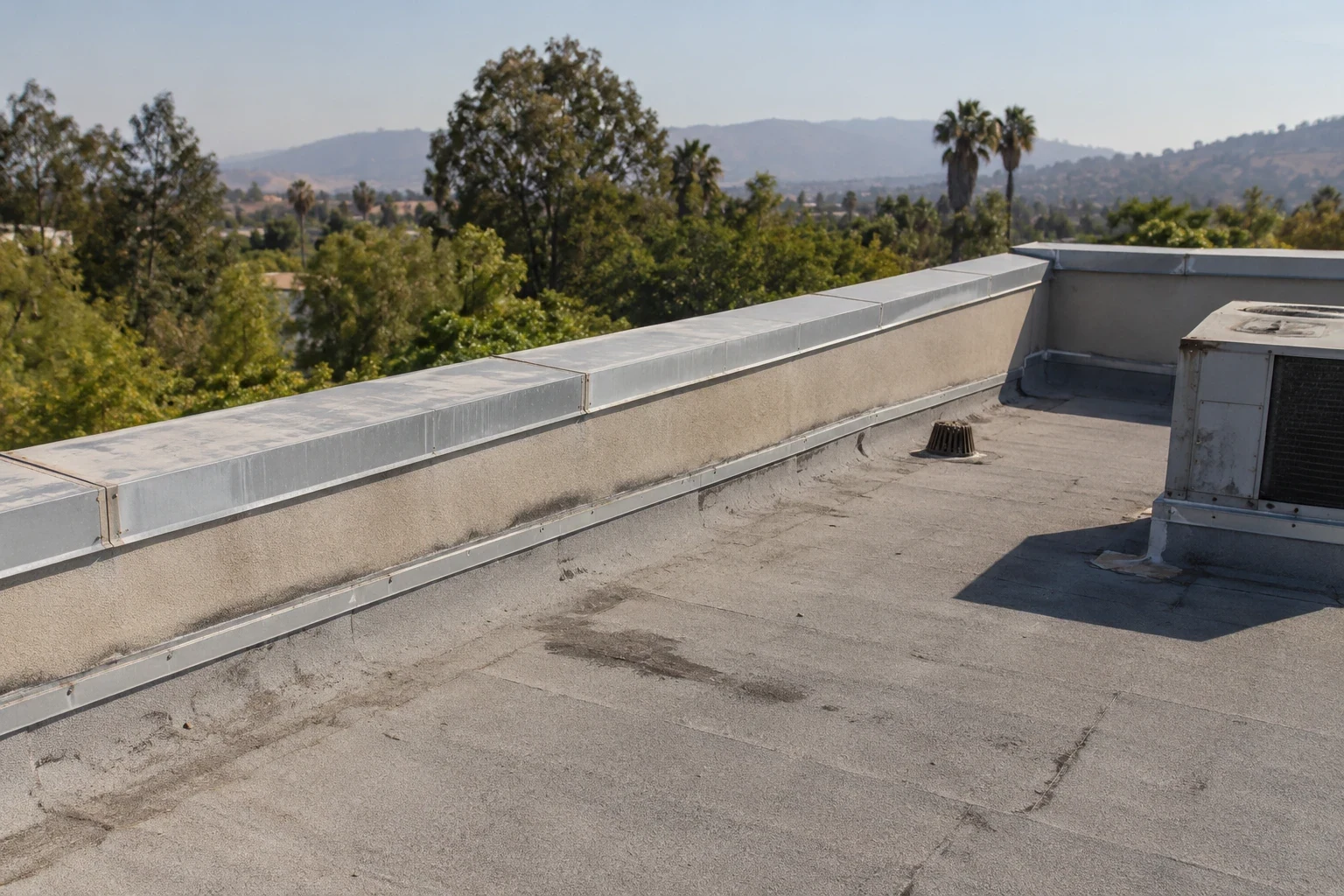
A scupper detail brings the roof, wall opening and discharge together. The accessible liner, joints and surrounding flashing each deserve attention. We examine them as an interface rather than treating the wall opening as an isolated hole.
Discharge beyond the opening matters too. A leader, conductor head or other component may need its own trade review. The repair plan should show how water continues away from the roof. Where overflow provisions exist, their condition and function need suitable examination.
Edge metal, coping and gutter work can share these interfaces. We identify which party handles each component and how the adjoining work is checked. That makes the scope easier to coordinate and reduces an undefined gap between roofing and drainage tasks.
It may contribute, but the symptom needs investigation. Water can reach the room through a damaged outlet detail or another nearby entry path. The ceiling location and reported timing guide the search. They do not identify the source alone.
Commercial roof leak repair compares the interior concern with roof observations. Suitable testing may help where necessary and authorized. A test should answer a defined question with controls for the building and assembly. We explain the findings without treating one result as proof that every possible path has been eliminated.
Active water near electrical equipment or sensitive operations needs coordination with the responsible personnel. Qualified trades manage those hazards. The roofing scope identifies access, protection and the next investigation or repair.
Santa Ana winds can move debris and complicate rooftop work. We select suitable conditions for access and the proposed task. A seasonal inspection before winter rain gives the manager time to arrange follow-up work where findings warrant it.
At Valencia Commerce Center, northwest of Interstate 5 and State Route 126, deliveries and roof access should fit the operator schedule. We locate the outlets from the actual roof layout and establish the route with the site contact.
Canyon Country commercial properties may have another access arrangement. The operator should identify entrances, staging and any restricted spaces. The inspection uses those building conditions, while regional wind and rain inform the planning window.
Label each outlet by location. Keep photographs of the original finding, completed cleaning or repair and any unresolved item. That allows the next inspection to compare the same detail. A list of clean drains without locations is less useful to a manager overseeing several buildings.
Put recurring checks into preventive roof maintenance. The schedule should account for the roof, exposure and relevant system requirements. Report new standing water or discharge concerns between visits so they can be assessed promptly.
For larger changes, maintain the design and permitting records with the roof file. The City of Santa Clarita uses current California codes and local amendments for applicable projects. Scope, submission date and jurisdiction need confirmation. Cleaning, localized repair and drainage redesign should remain distinct in both the estimate and final record.
Evaluate the drainage route from the surrounding roof area through the approach, outlet and discharge connection. Debris, a restricted opening, a damaged bowl or an obstructed downstream path can present differently, so record what was actually accessible and cleared. Note water observations and conditions after a suitable opportunity for drainage; a photograph of a wet area alone cannot establish slope or the cause of ponding. Confirm whether the work includes only cleaning, a detail repair or a change to the drainage assembly. Keep each outlet location and follow-up item identifiable in the maintenance record.
It establishes an accessible observation. The water path, connections and concealed piping may need further assessment. We identify the question that remains after cleaning.
The responsible qualified plumbing trade evaluates piping work. We document accessible roof findings and coordinate the connection between that work and the roofing detail.
A proposed opening needs project-specific drainage and construction review. The scope must account for the wall, roof, discharge and applicable requirements before installation.
Note its location and relevant weather when it can be observed safely. Photographs and a roof plan help compare visits. The cause still needs assessment.
We identify the detail, work performed and remaining concerns. Keep photographs, authorizations and any design or trade records with the roof file for future checks.
Call Commercial Roofing Santa Clarita with the outlet concern and available roof plan. We will distinguish cleaning, roof repair and any further drainage assessment.
Pages that connect with Roof Drains and Scuppers for Santa Clarita Valley buildings.
Notifications